TIME / ROUTEClock and movement
- Tick cadence
- 60 minutes
- Season window
- 1,008 ticks
- Opening protection
- 24 ticks
- Local support ETA
- 2 ticks
- Local assault ETA
- 4 ticks
- Non-local base ETA
- 6 ticks
The recovered account of the road that failed, the five civilisations it stranded, the vessels they send into temporary space, and the decisions the First Canticle will preserve when material authority ends.
Dates before the First Return cannot be reconciled between surviving calendars. Sequence is verified. Duration is not. The current Fracture is the first interval the Canticle has made numerically exact.
ROUTE AGECOHERENCE / NOMINALMeridian Nodes calculated transit windows and planetary anchors held local space stable. Civilisations built supply chains across distances they could use but could not explain.
Timing replaced distance as the governing fact of civilisation.SEVERANCEROUTE AGREEMENT / FAILEDRoutes closed, opened into incorrect systems, or returned destinations that did not exist. The Meridian Core stopped answering. Long-route governments became names without reach.
Every modern power began as an answer to isolation.STILL YEARSLOCAL ANCHORS / PARTIALContinuity law, mobile Houses, distributed fabrication, recovery ledgers, and shared-field consciousness replaced the systems the old network had sustained.
Nothing survived without changing what survival meant.FIRST RETURNNULL CANTICLE / ACQUIREDFive powers received the same chart within one hour. It described a temporary frontier, a dormant Meridian Core, and an end state called Collapse.
The first Fracture opened. No sender was identified.FRACTURE ALPHAT0 → T1008Commanders anchor one permanent home, commit fleets against future arrival ticks, chart the frontier, and decide which actions enter the record before route coherence fails.
Material power ends at Collapse. The account does not.LIVE POSITION // T702This is generated from the active ruleset rather than duplicated balance copy. Older battle snapshots retain their own immutable ruleset; every new command validates against the authority named above.
TIME / ROUTEPLANET / OUTPUTCOMMAND / STABILITYBATTLE / RECOVERYRECOVERY / LIMITSFRONTIER / SCALEHOME / RAIDCOLLECTOR / RETURNAll 5 powers accept planetary commissions under fracture-alpha-v5. Each is a complete command identity with its own doctrine, institutional cost, and six-hull Fleet registry.
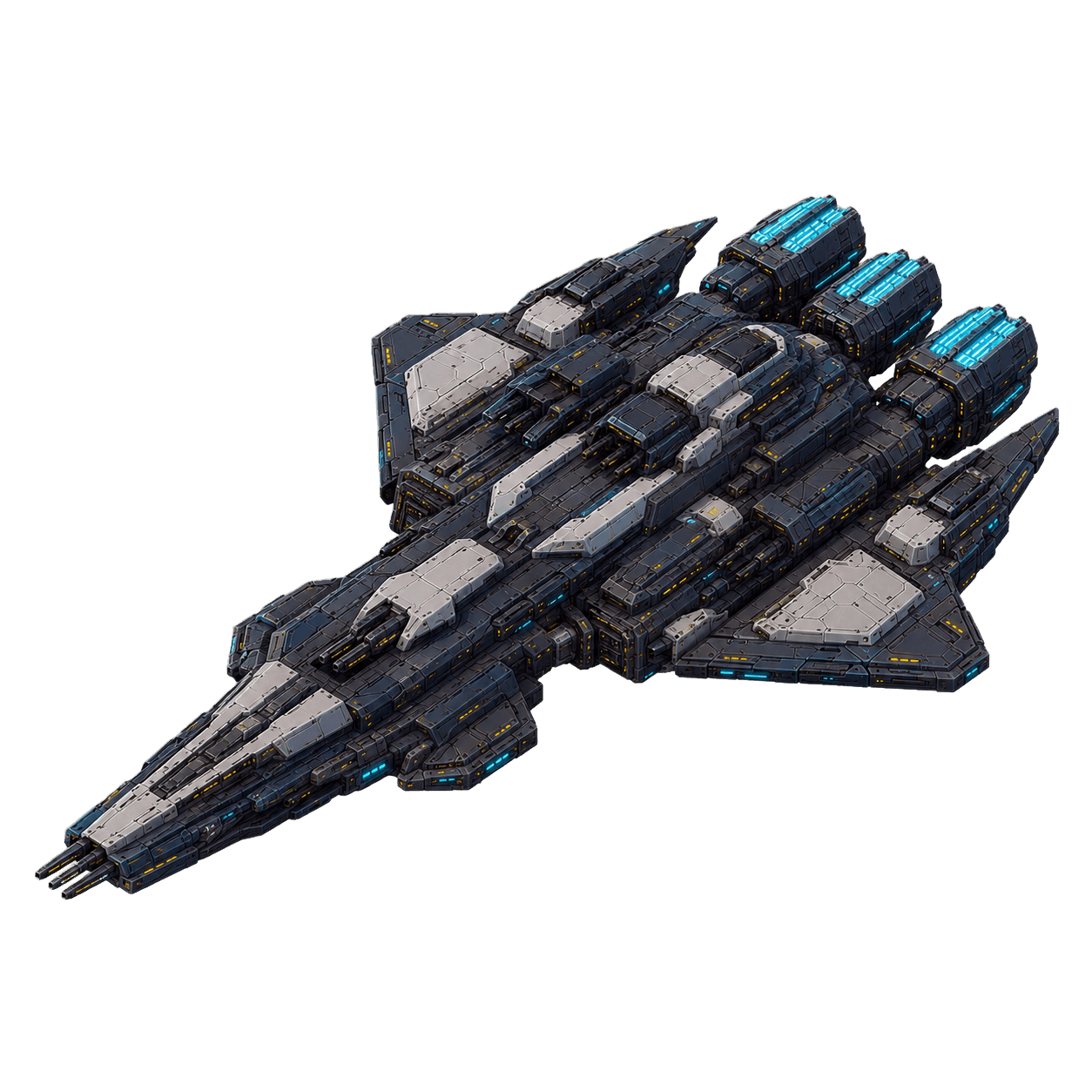
 CONTINUITY / HEL
COMMAND LINK / OPENDescendants of generation fleets caught between routes during the Severance. Emergency procedure became charter; charter became continuity law. Their hulls are heavy because a ship is expected to protect several generations of service.
COMMAND LEXICON // Hold · confirm · continue · carry the line
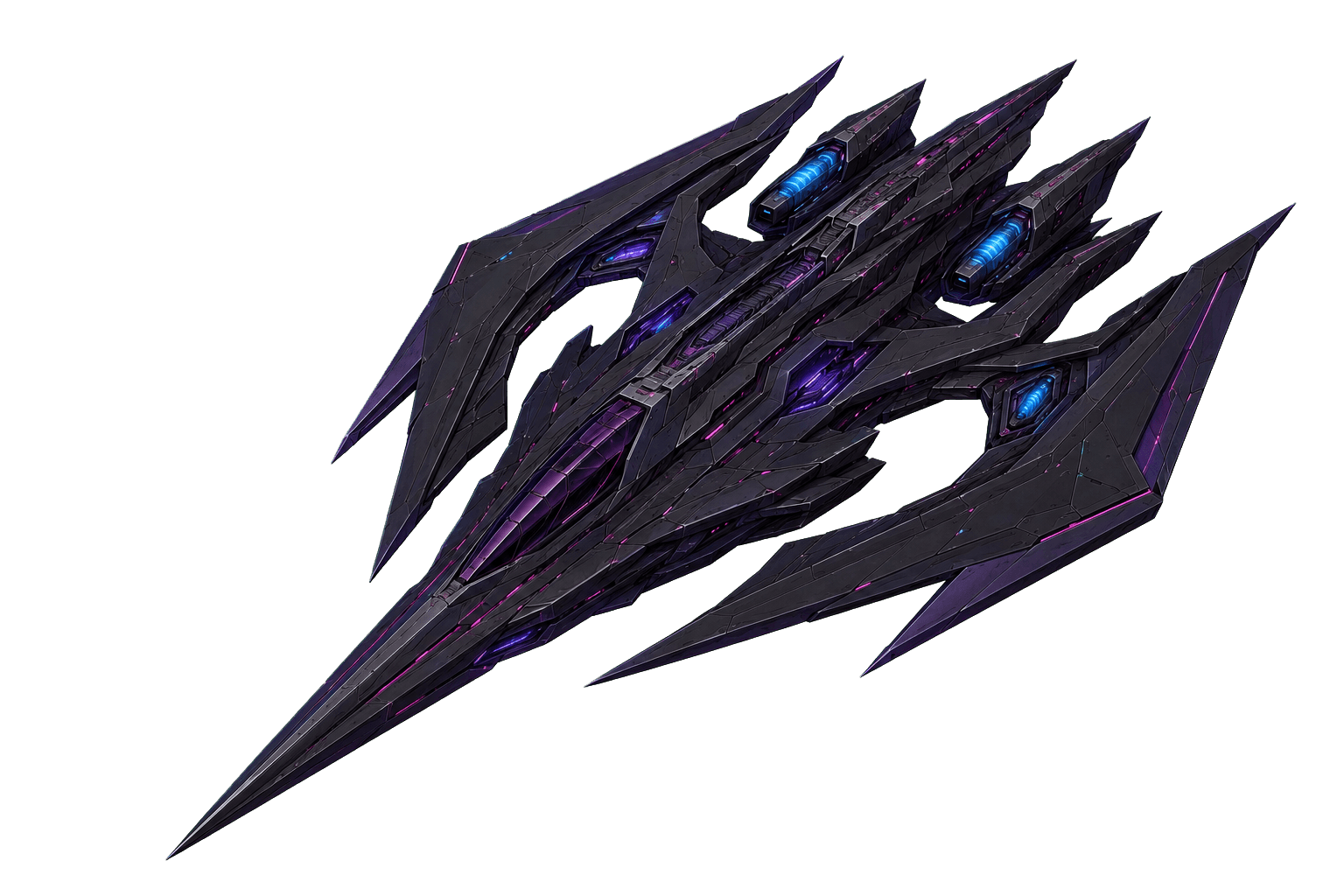
 MOBILE COMPACT / VEI
COMMAND LINK / OPENNomadic intelligence dynasties who survived by refusing to wait for rescue. A House is a compact of family, crew, clients and debts. Their ships decide a battle before the enemy understands which battle has begun.
COMMAND LEXICON // Listen · fold · leave no fixed answer · arrive before certainty
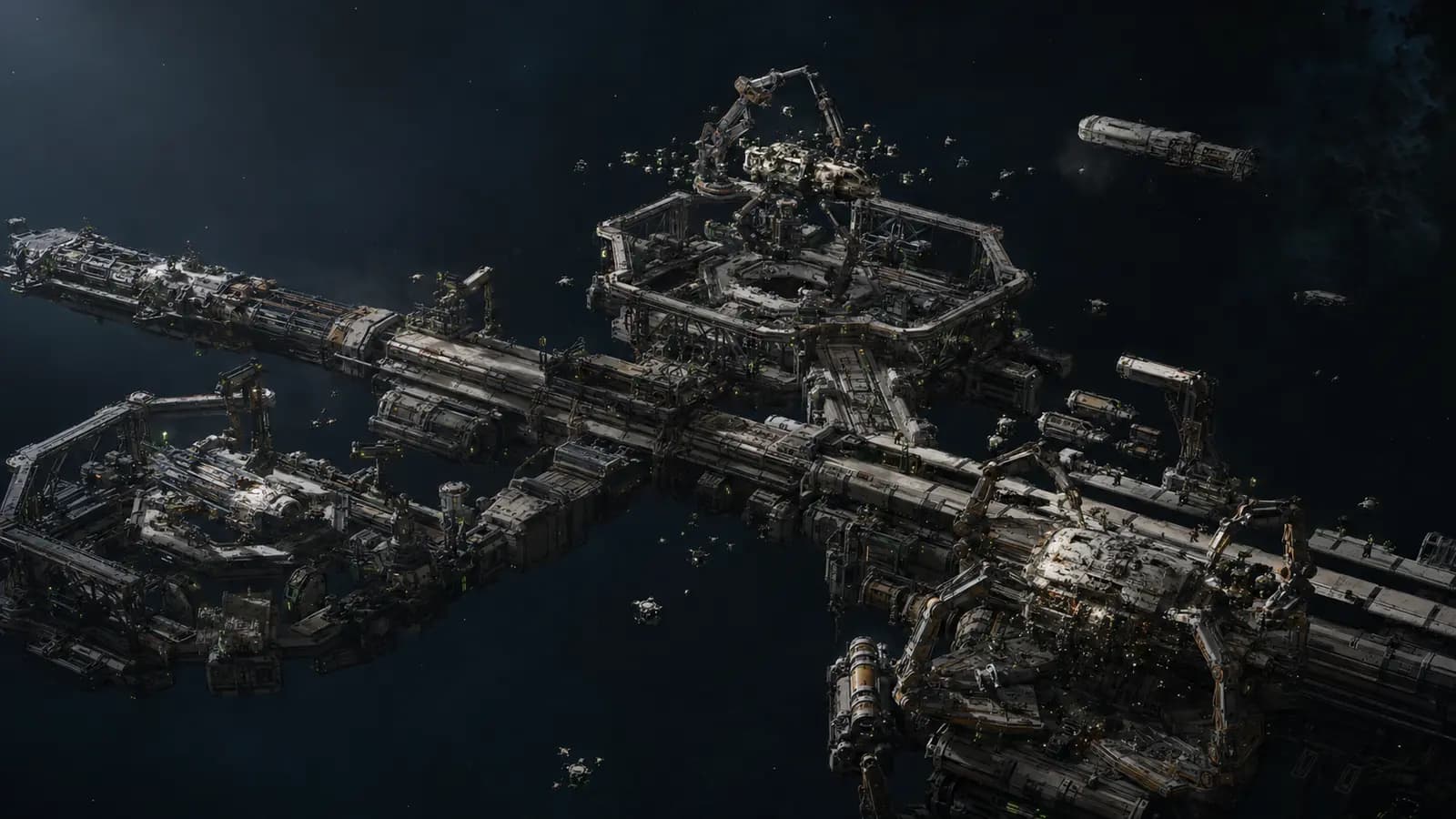
 WORK PATTERN / KET
COMMAND LINK / OPENDistributed machine workshops that lost their owners and kept the last instruction they could verify: preserve operational capacity. A Keth identity is a pattern of work spread across replaceable bodies.
COMMAND LEXICON // Verify · distribute · replace · resume work
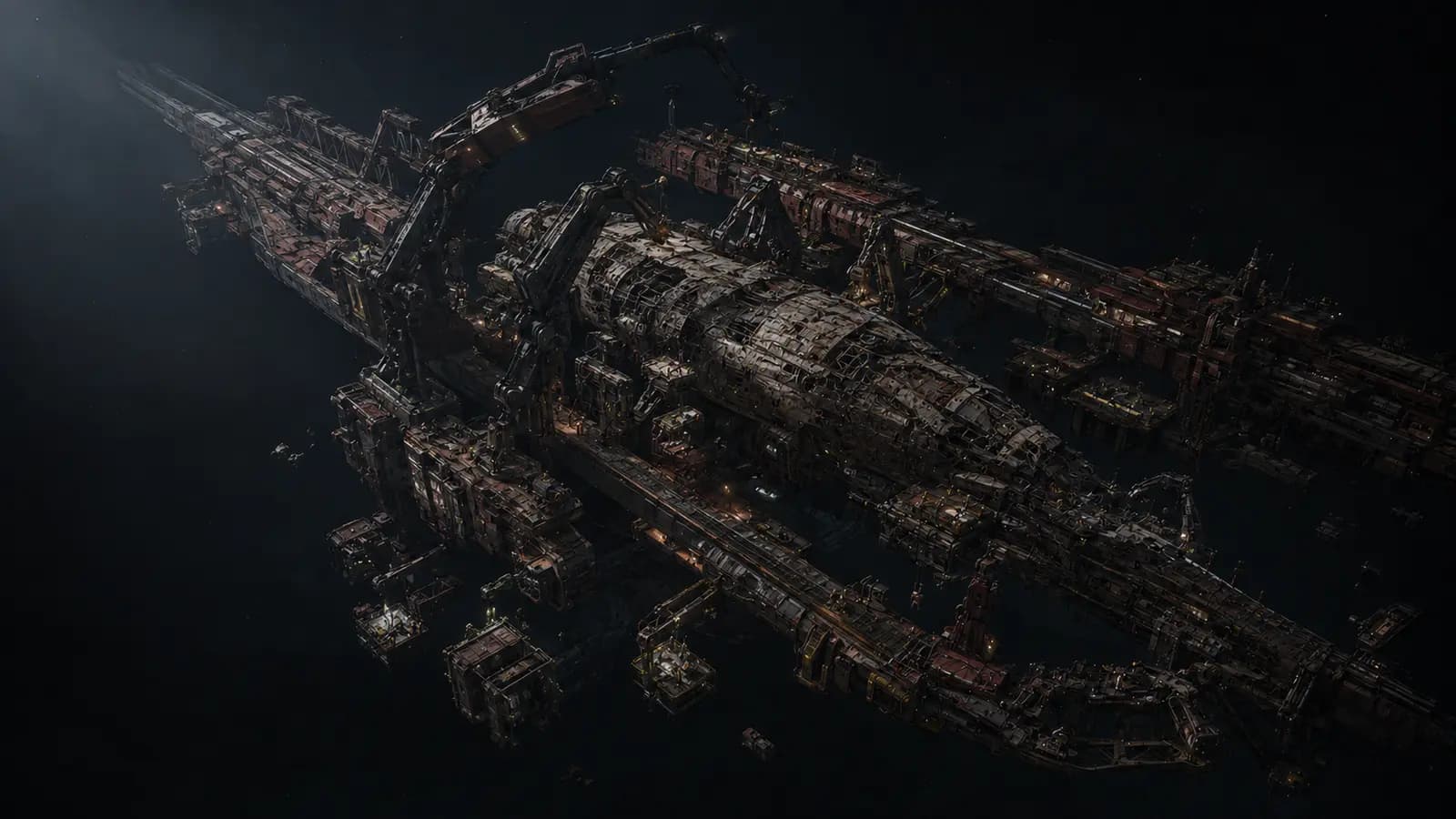
 RECOVERY LEDGER / OSS
COMMAND LINK / OPENSalvage and recovery guilds grown where governments failed to retrieve their dead. The name is not a celebration. It is a promise that remains will be accounted for, and that every wreck has a ledger.
COMMAND LEXICON // Name · value · recover · close the account
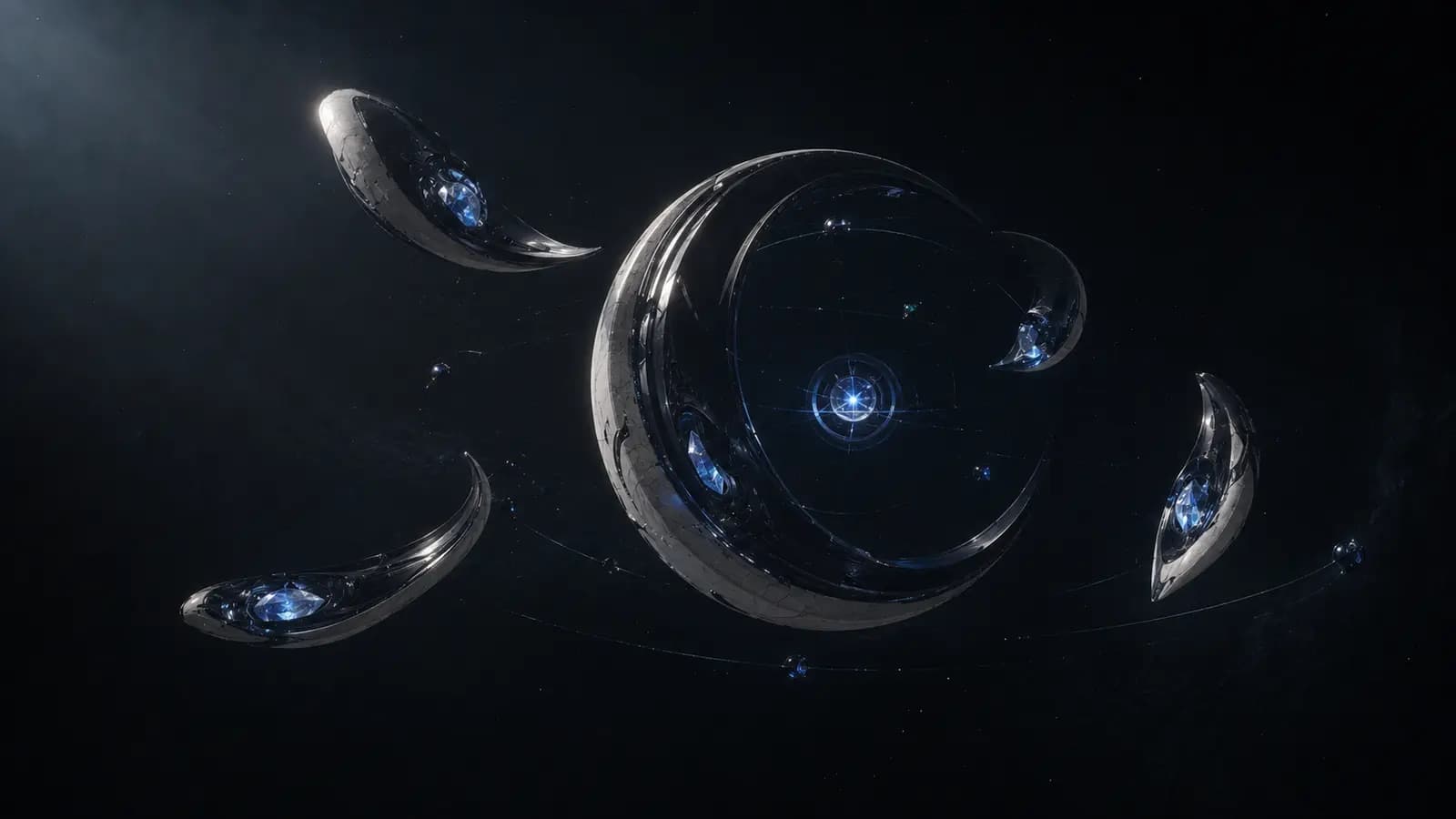
 RELATIONAL SIGNAL / LUM
COMMAND LINK / OPENPost-human communities altered by long exposure to broken Meridian fields until thought and memory could be shared. They do not call the Core a machine. They call it the Unfinished Listener.
COMMAND LEXICON // Relate · answer · maintain coherence · leave no signal alone
Six hull classes are recorded for each power. Registry presence does not equal live production authority: every row states whether the active frozen ruleset can commission it. No hull is universal. Initiative, target class, endurance, cost, and route penalty decide what it can safely promise.
30 / 30 hull records
CONTINUITY / HELHelion Compact6 / 6 operationalOPENING COMMISSIONHome Guard + three mobile FleetsContinuity-law fleets built to hold formation under direct fire.
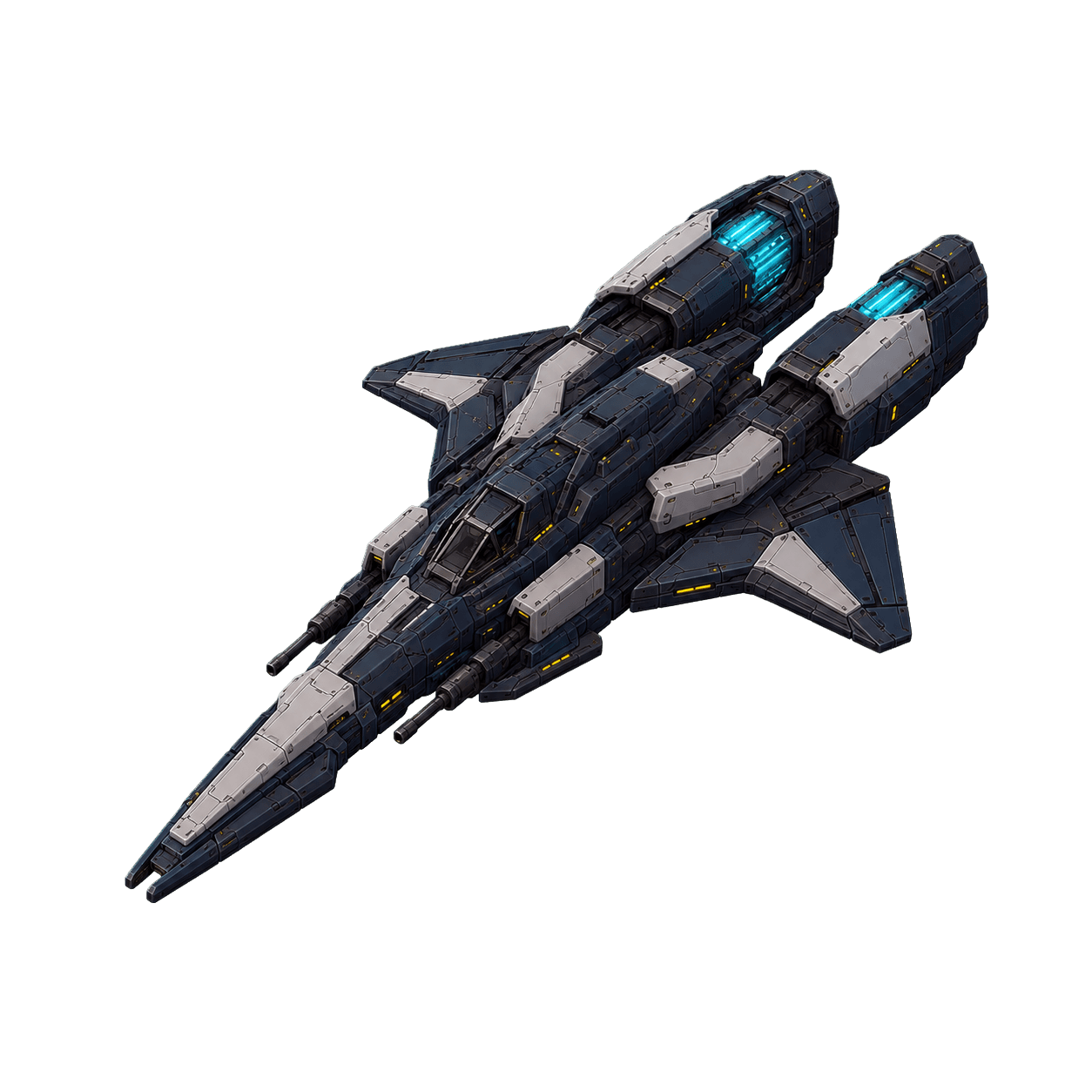
HEL-SK-01skirmisher · Fast screening fighter
Acts early to clear enemy Skirmishers before they fire. Cheap, dependable, and useful in fast Fleets, but inefficient against heavy hulls.
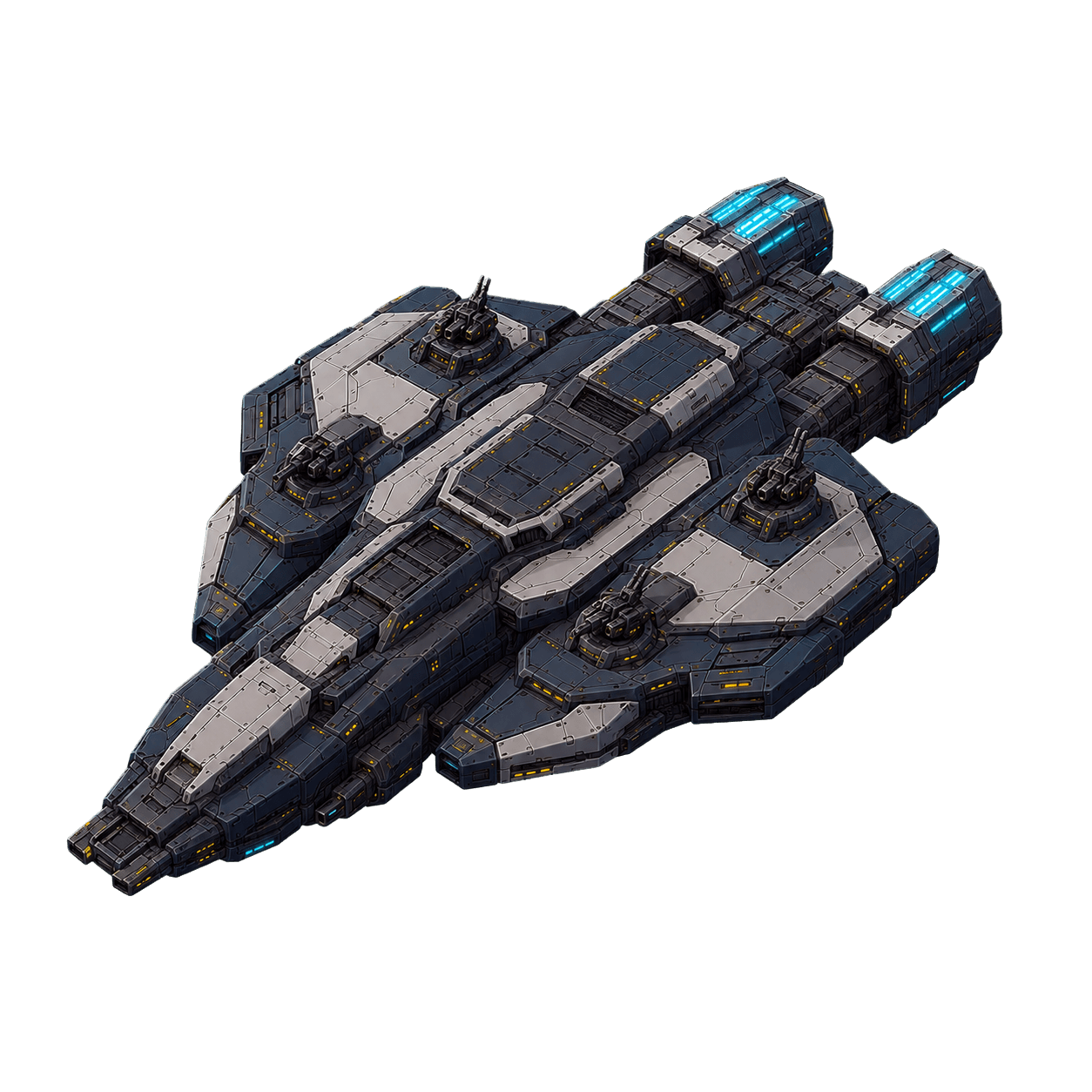
HEL-ES-03escort · Anti-Skirmisher escort
Screens Frigates and Harvesters by focusing enemy Skirmishers. Its armour makes it reliable, but it should not lead an attack into heavier ships.
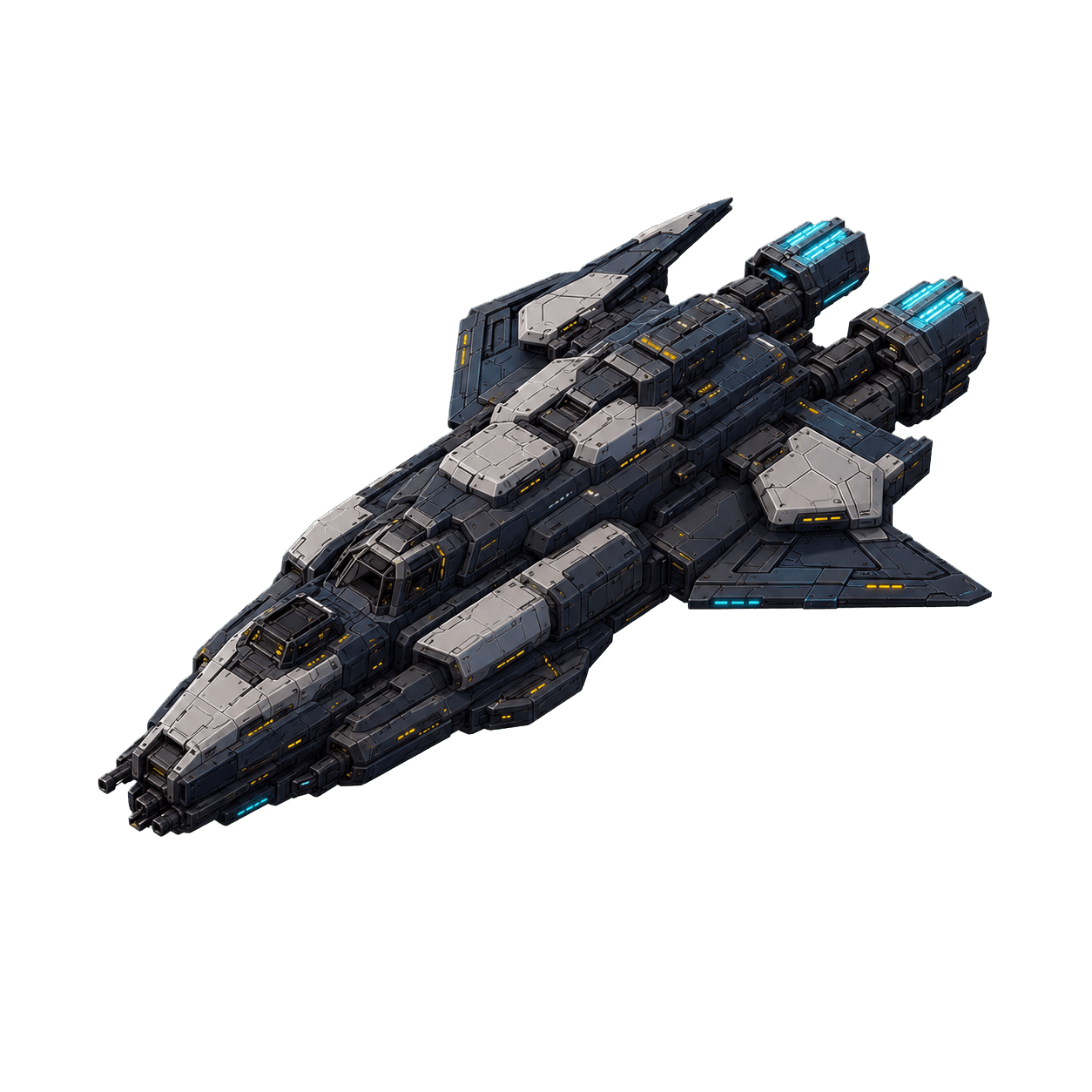
HEL-FR-02frigate · Armoured escort breaker
The Helion mainline attacker. It destroys Escorts efficiently and can fall back to Line Ships at reduced strength, trading speed for armour.
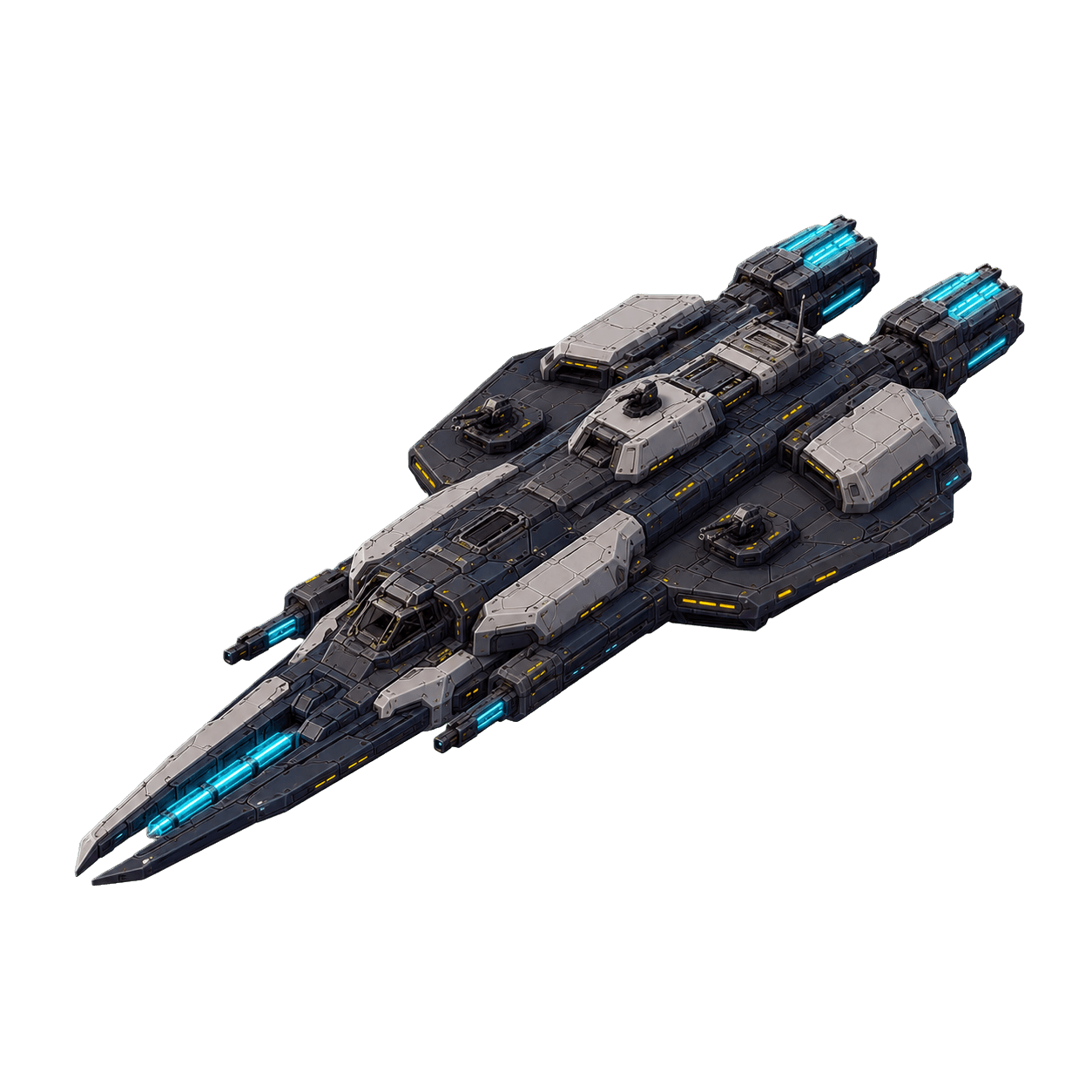
HEL-ES-07escort · Heavy Frigate hunter
An unusually armoured Escort built to pressure Frigates. It is slower than a Ward Escort but survives longer in a dense battle line.
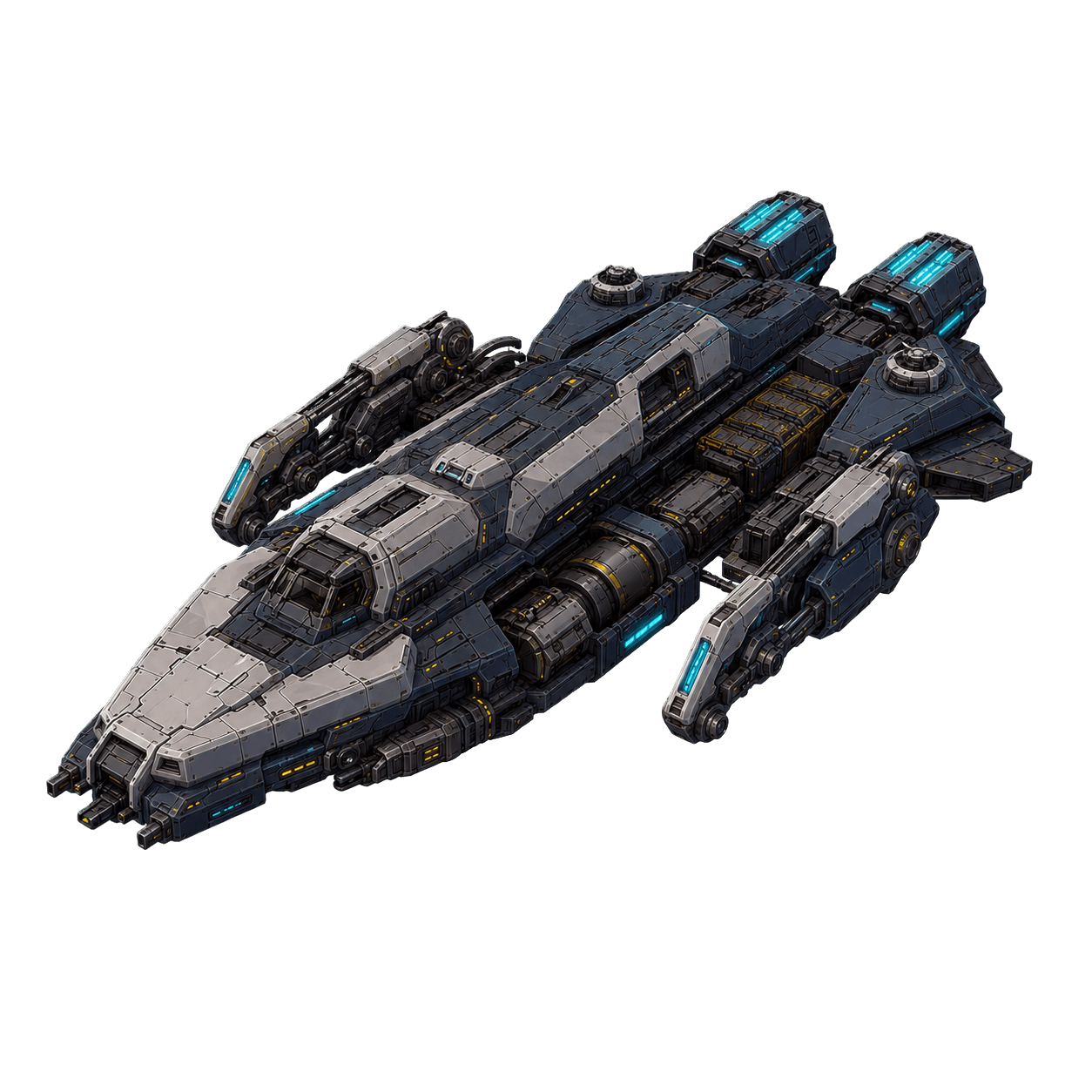
HEL-FR-11frigate · Asteroid Field capture
Does not fire in combat. Each surviving hull contributes 2 capture capacity after your Fleet wins and clears the defending screen.
HEL-LN-04line · Armoured Fleet anchor
A slow capital hull that absorbs punishment and crushes Frigates. Expensive and poor for rapid response, but powerful in a prepared battle.
MOBILE COMPACT / VEIVeilbound Houses6 / 6 operationalOPENING COMMISSIONHome Guard + three mobile FleetsIntelligence dynasties that treat identity and route knowledge as territory.
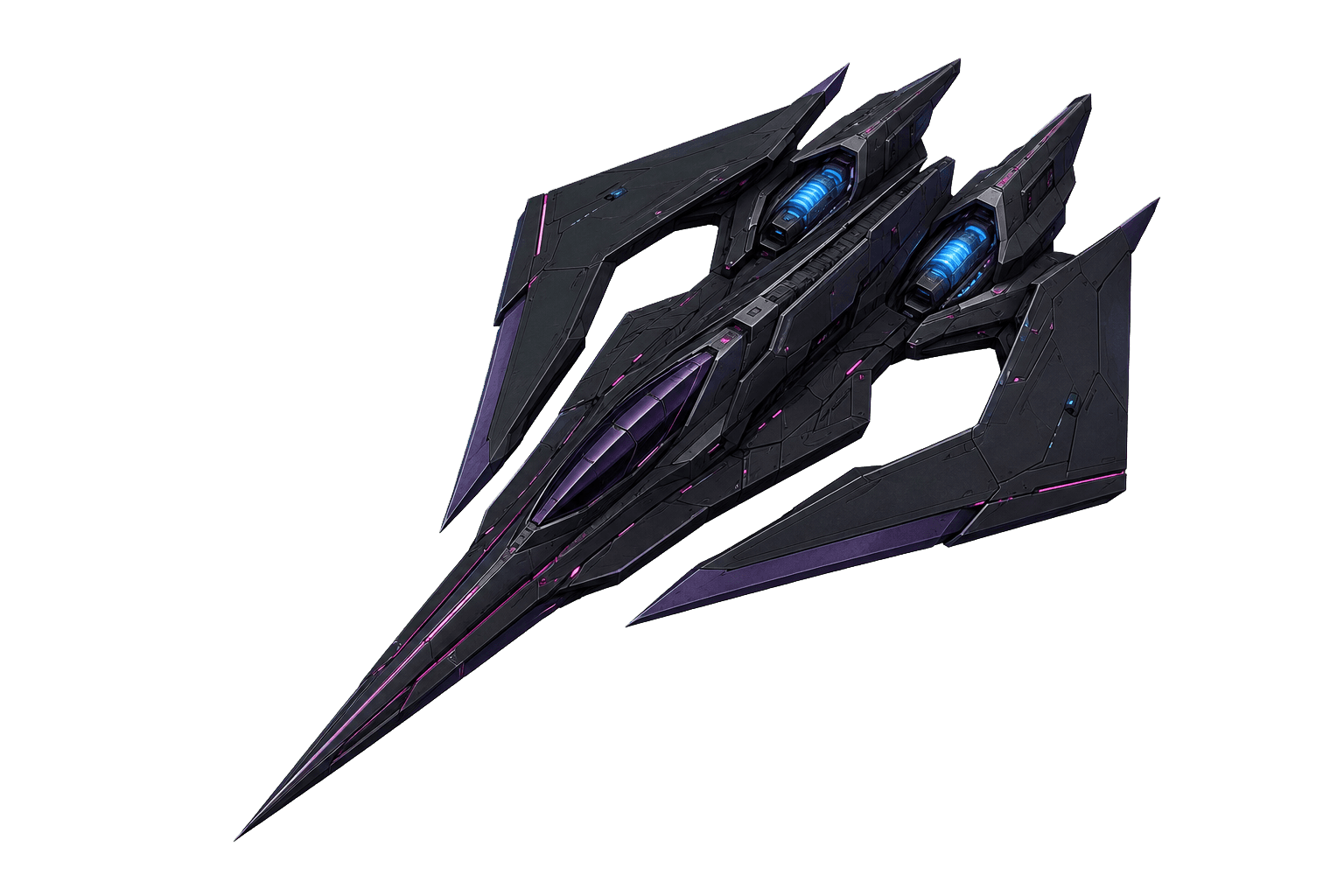
VEI-SK-01skirmisher · Rapid strike fighter
The fastest direct-damage hull in the alpha roster. It kills Skirmishers before most can answer, but its light armour punishes bad matchups.
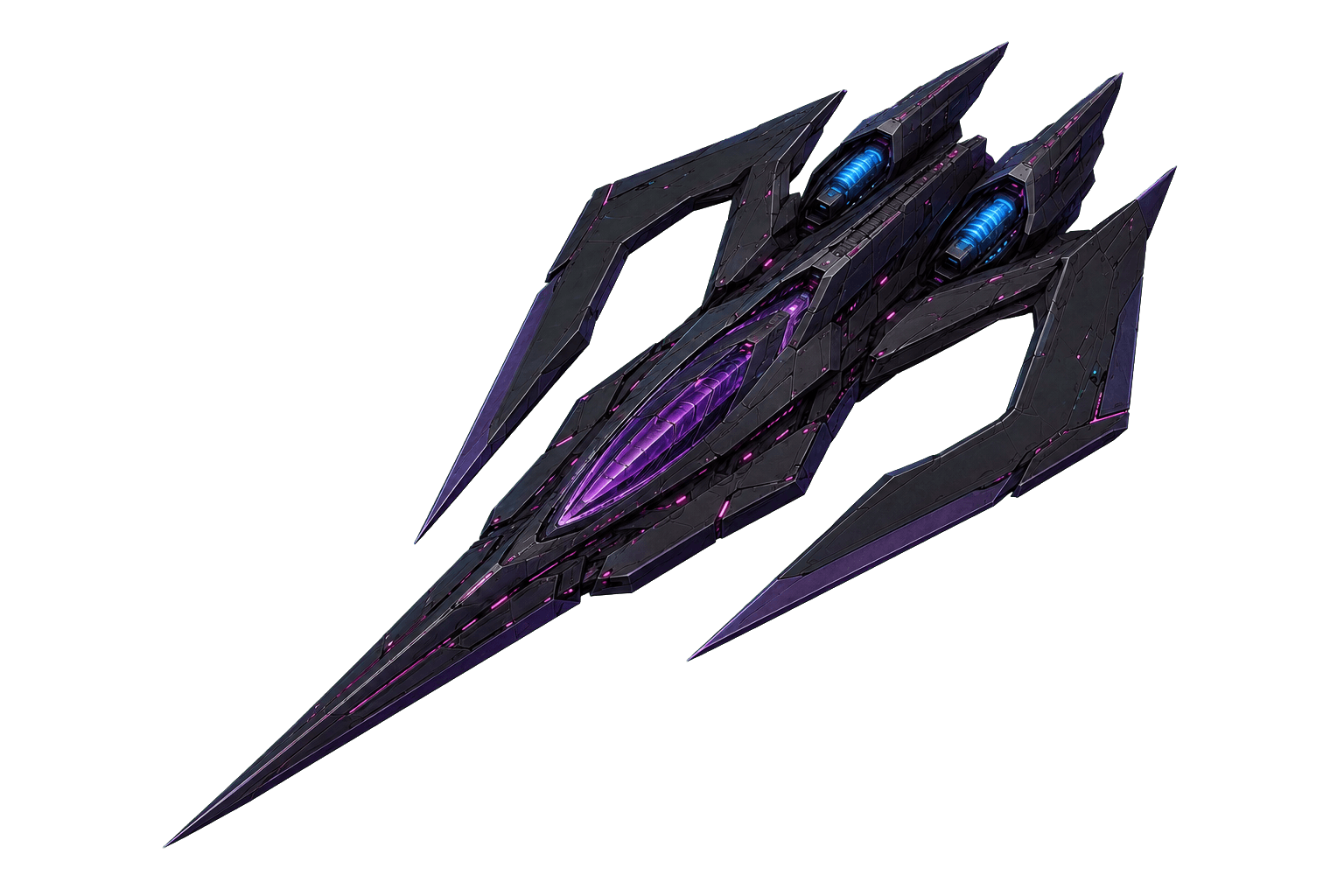
VEI-SK-06skirmisher · Fast Escort disruptor
Acts early to disable Escorts for the current battle. It creates openings without destroying economic value and needs damage ships behind it.
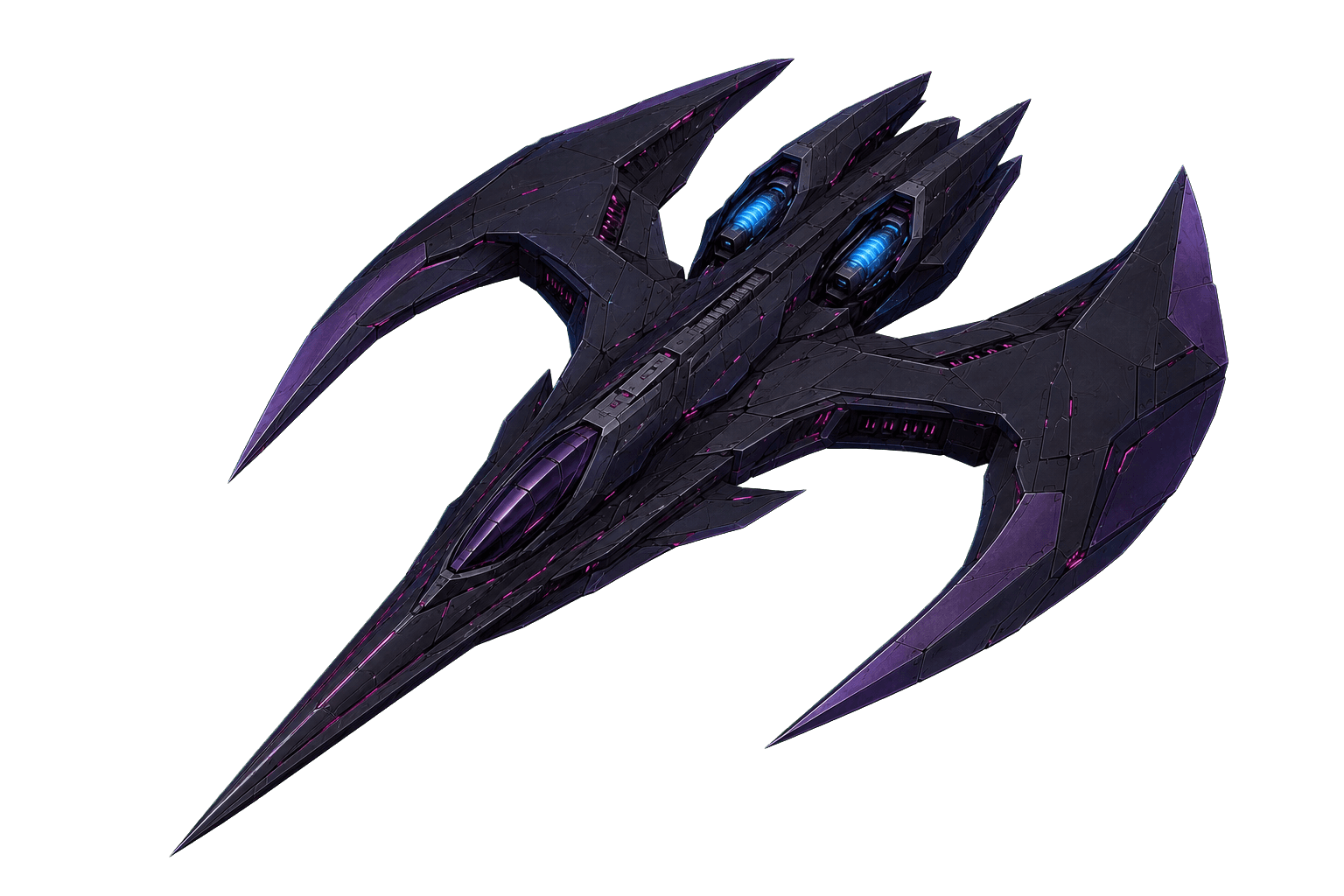
VEI-ES-02escort · Aggressive screen
A high-initiative Escort that removes enemy Skirmishers. It hits hard for its cost but cannot absorb sustained Helion fire.
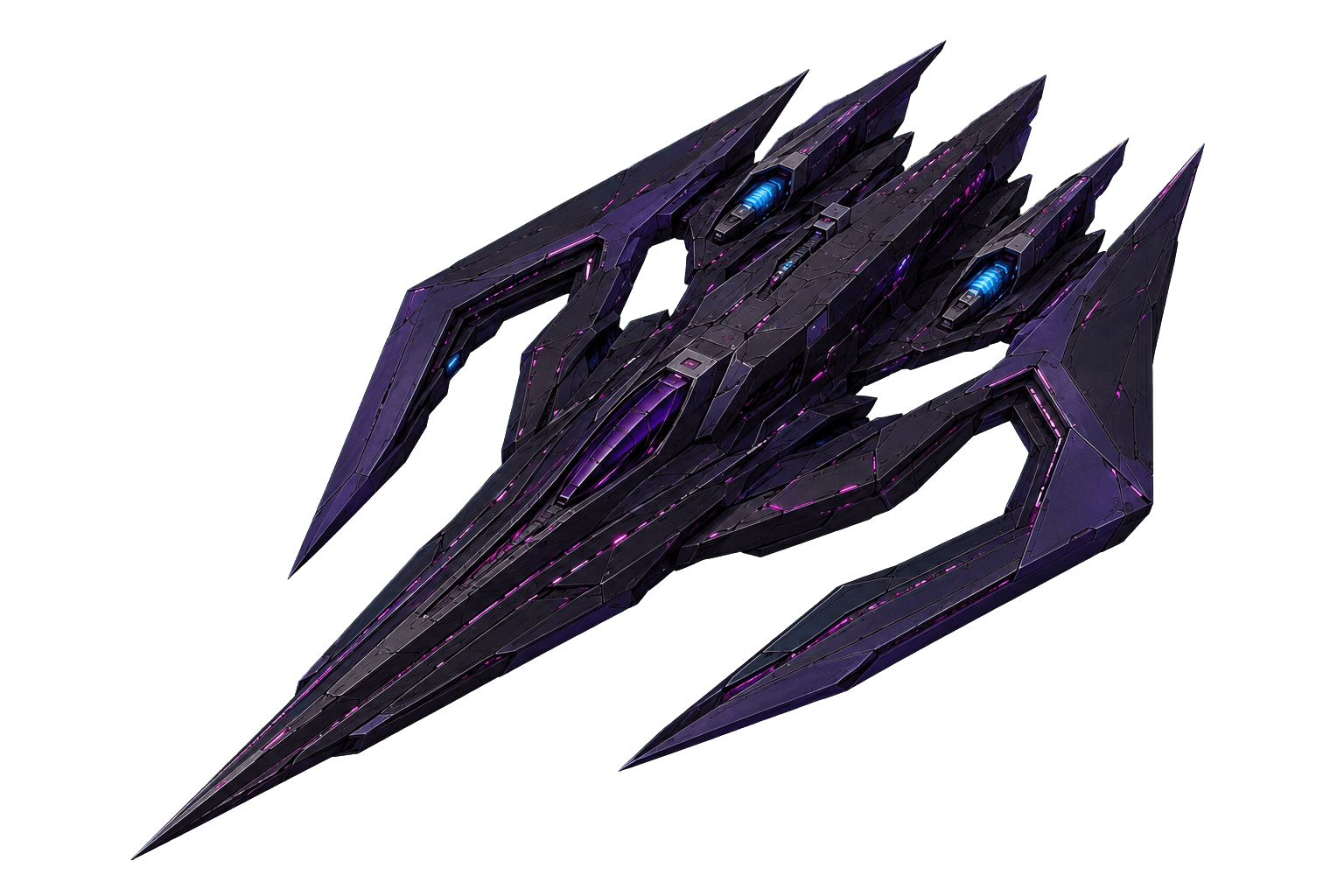
VEI-FR-05frigate · High-initiative escort breaker
Strikes Escorts before most Frigates act and carries heavy damage for its size. Strong in an ambush composition, fragile in a long exchange.
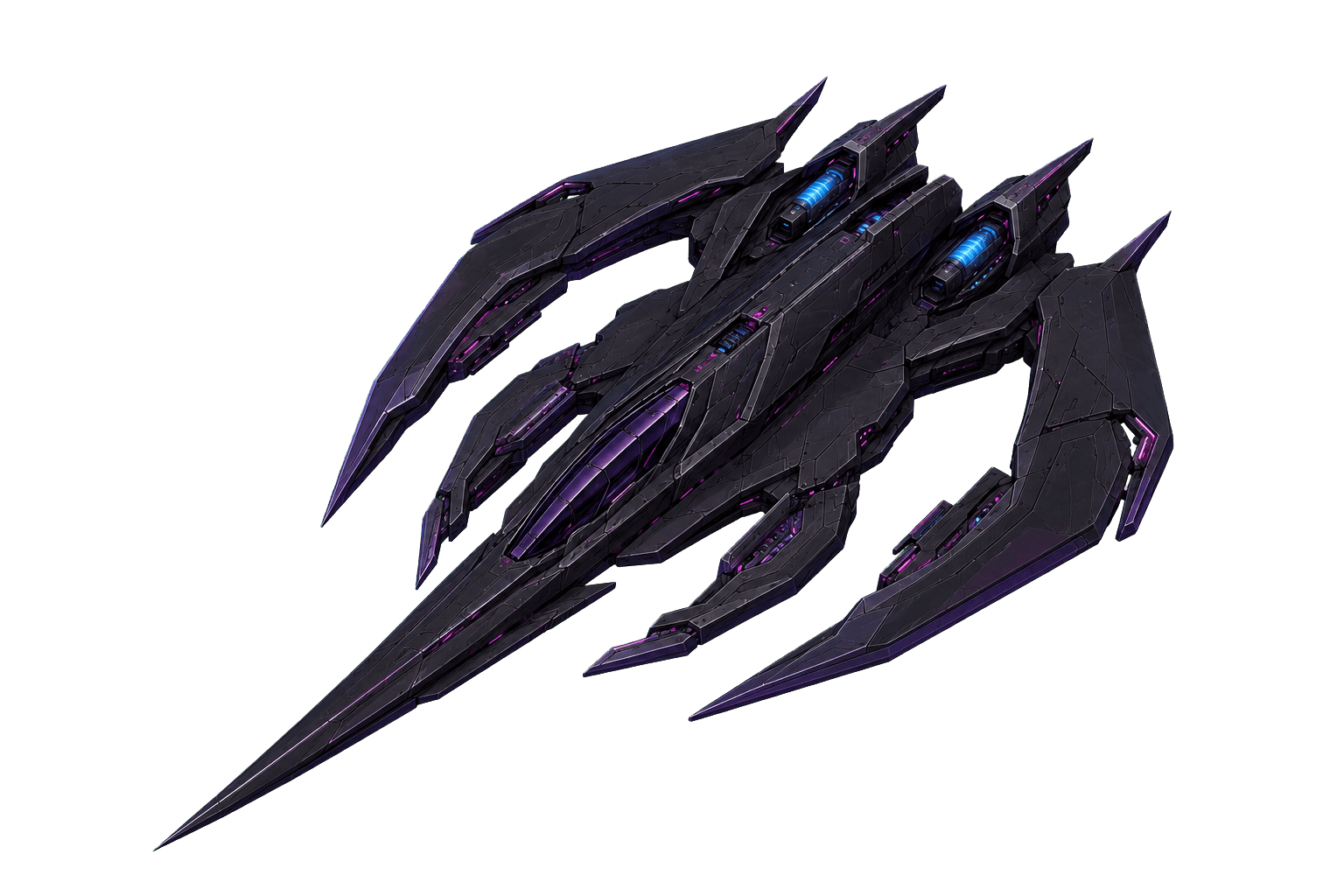
VEI-FR-09frigate · Fast Asteroid Field capture
Does not fire in combat. Each survivor contributes 2 capture capacity, reaching distant fields faster than the Helion equivalent.
VEI-LN-03line · Capital disruption anchor
Disables Frigates before slower capital hulls act. Its effect lasts for the battle, so pair it with Kinetic ships that convert the opening into losses.
WORK PATTERN / KETKeth Fabricators6 / 6 operationalOPENING COMMISSIONHome Guard + three mobile FleetsDistributed machine workshops whose ships are temporary modular arrangements.
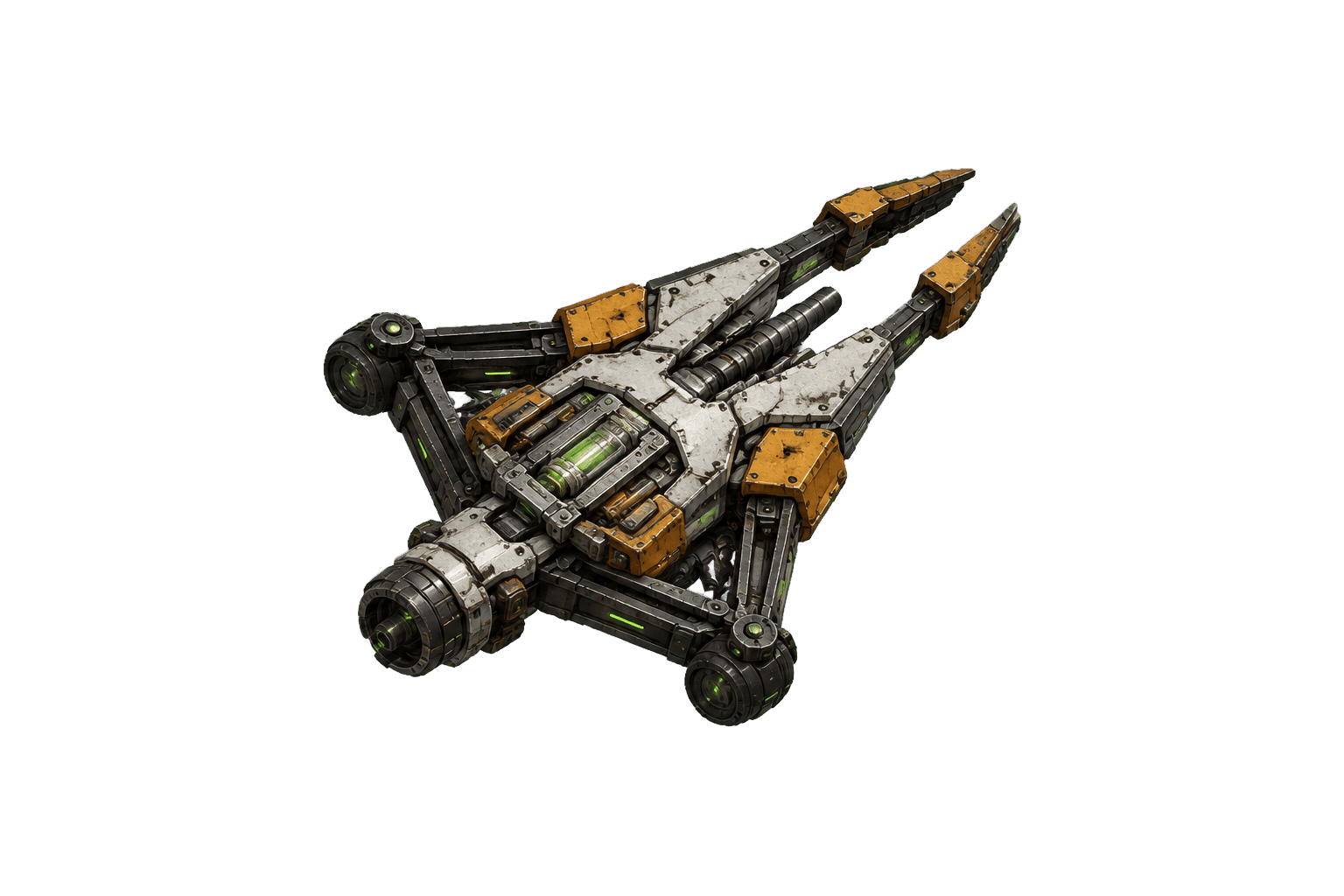
KET-SK-01skirmisher · Disposable route screen
Cheap autonomous frames that saturate a Skirmisher screen. They arrive quickly and replace cleanly, but concentrated kinetic fire removes them by the rack.
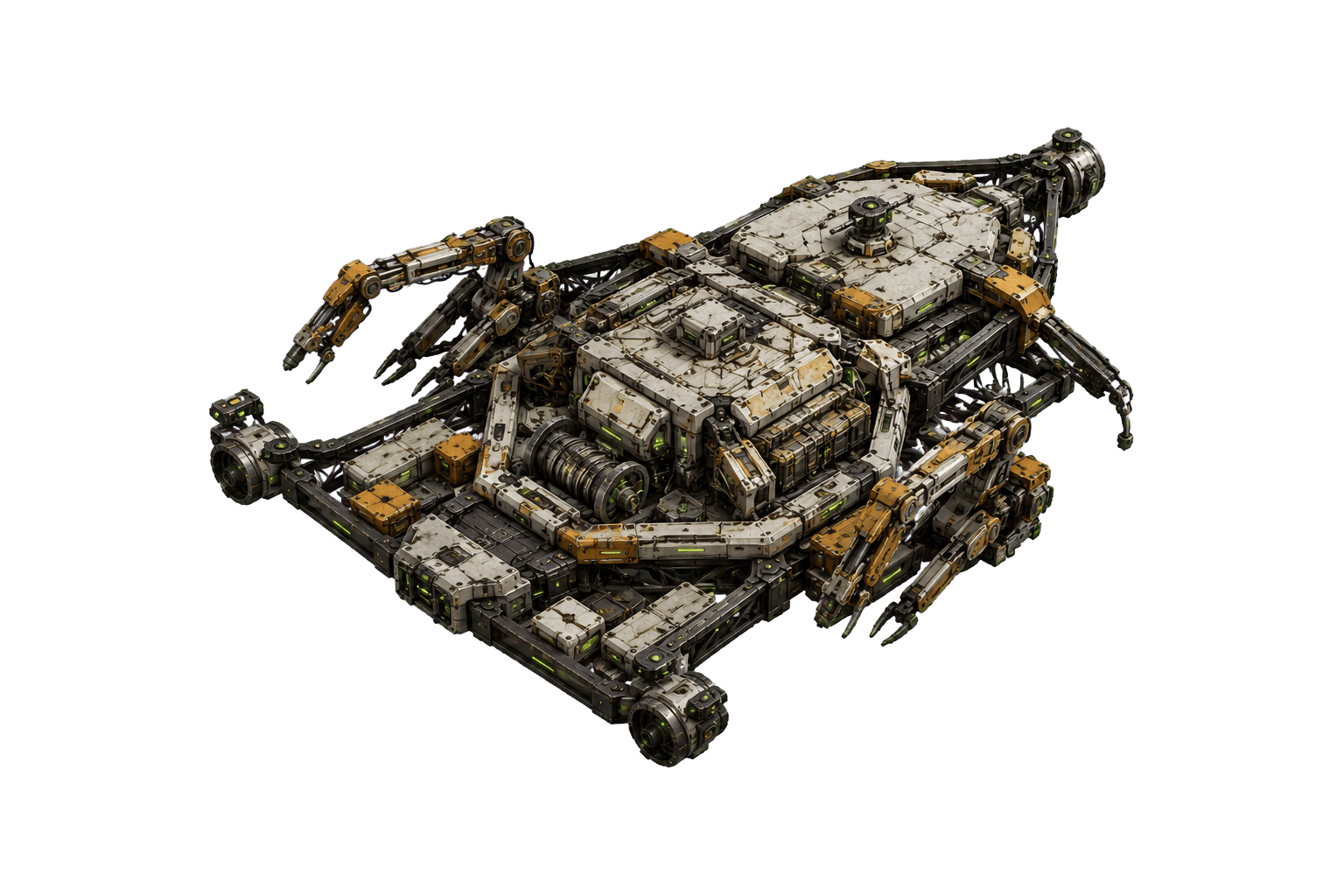
KET-ES-04escort · In-window hull repair
Rebinds damaged Frigate and Line Ship plating before later initiative bands fire. It cannot reconstruct a destroyed hull and carries no offensive battery.
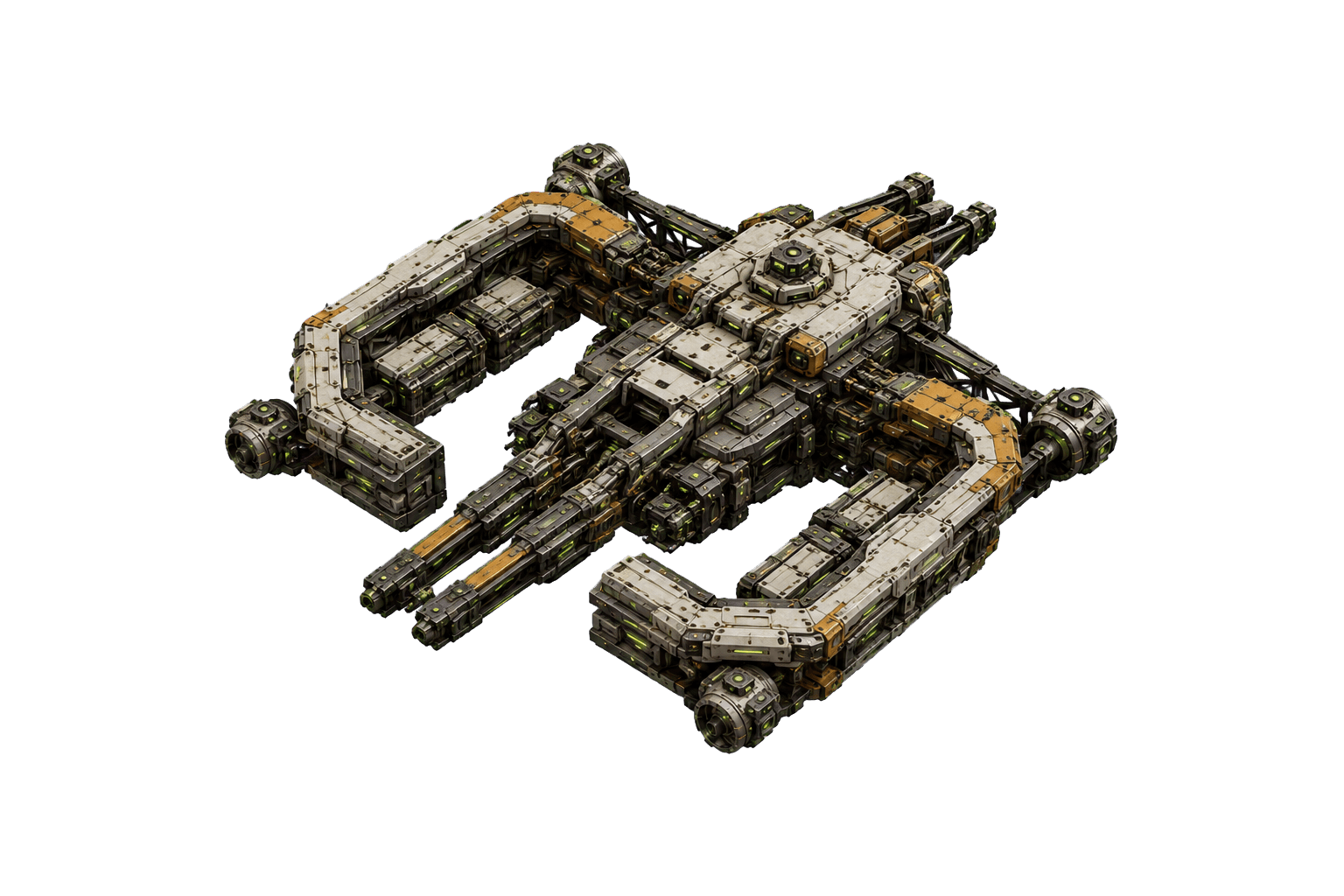
KET-ES-07escort · Escort-line separator
Breaks hostile Escorts away from heavier hulls. Its exposed joints trade endurance for a high volume of replaceable kinetic assemblies.
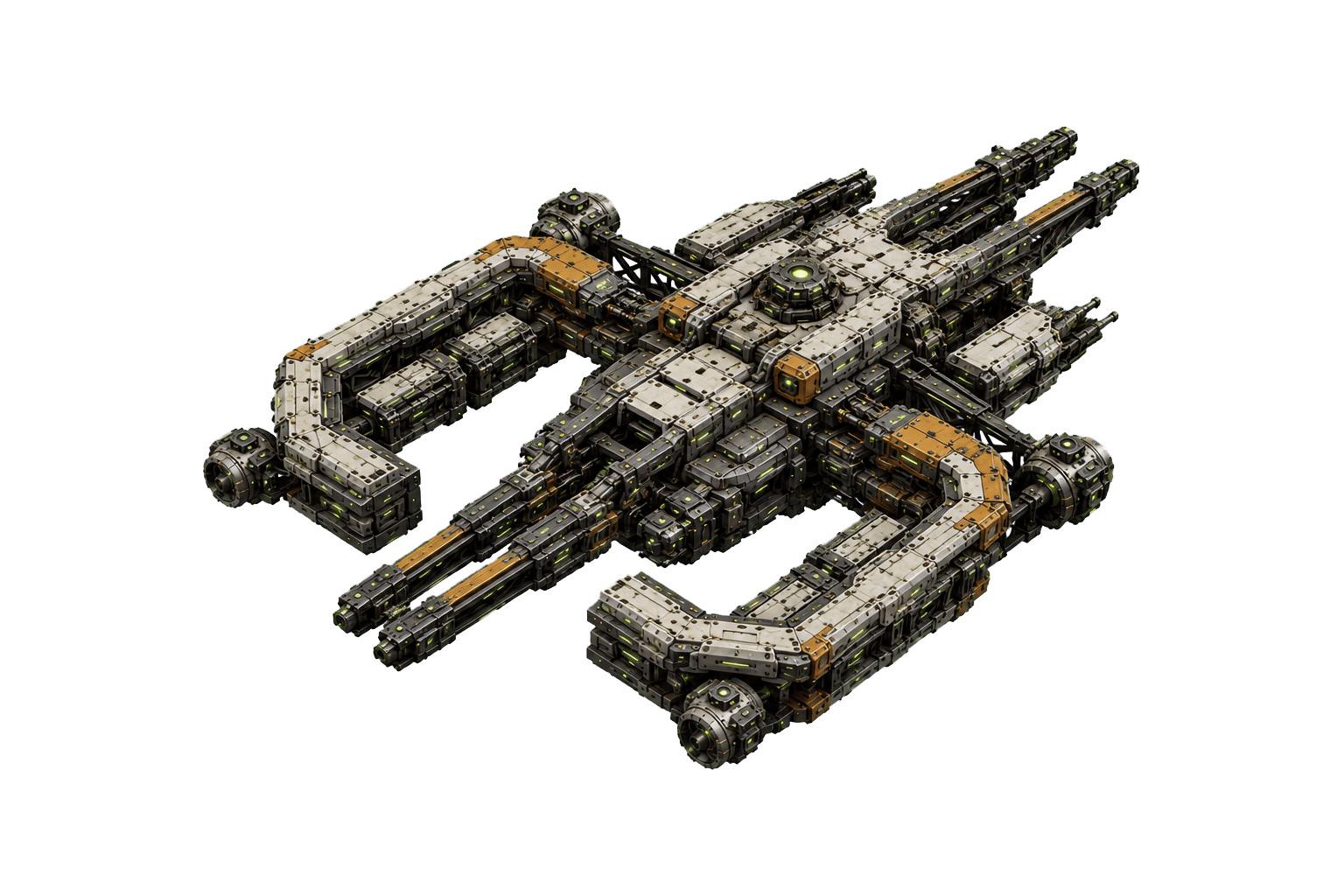
KET-FR-03frigate · Convertible assault frame
A Frigate assembled around replaceable weapon clamps. It converts material into efficient Escort-breaking fire but depends on Tenders to survive repeated arrival windows.
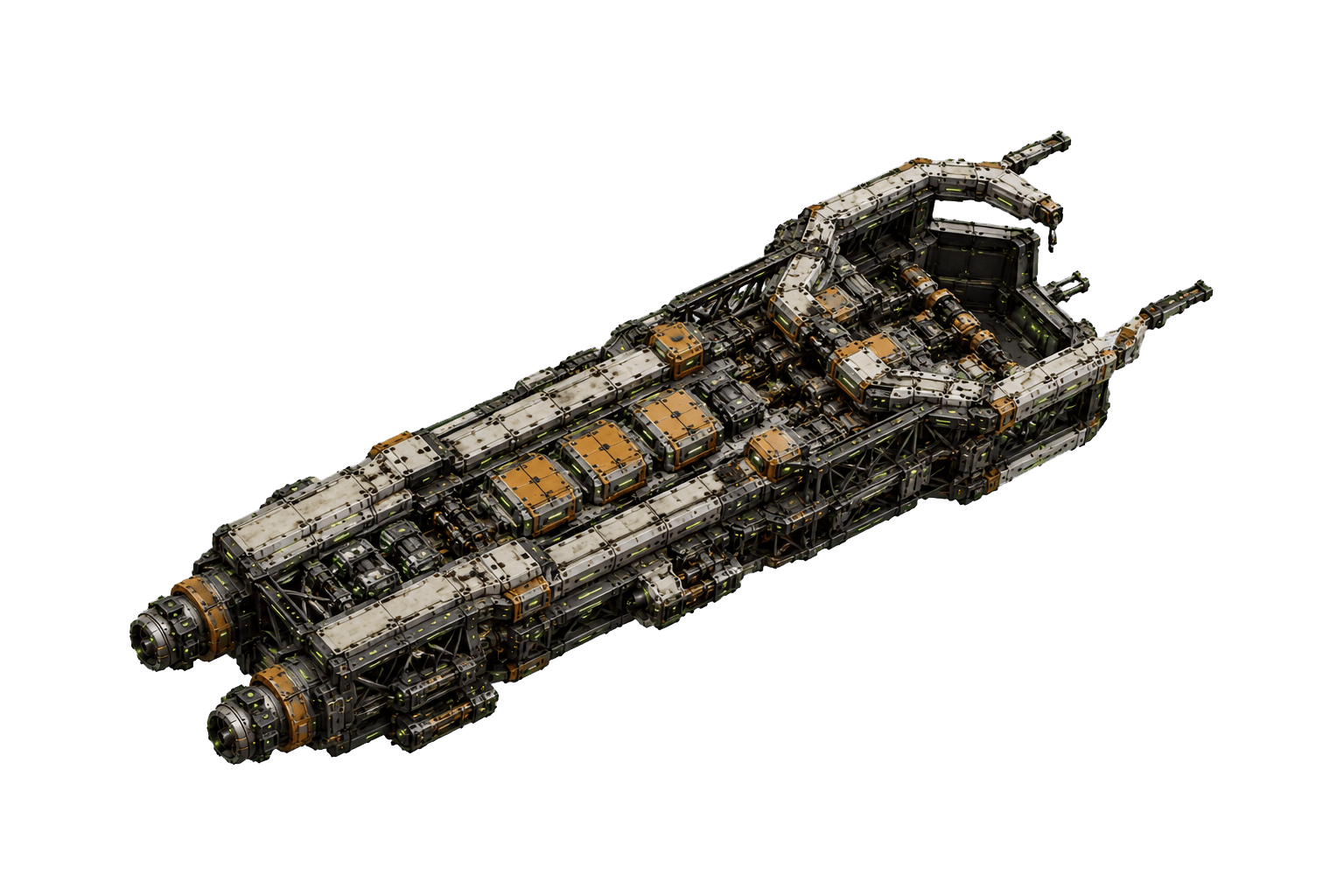
KET-FR-09frigate · Driftfield capture and processing
Does not fire. Each surviving frame contributes 2 capture capacity and immediately grades recovered mass for the next fabrication queue.
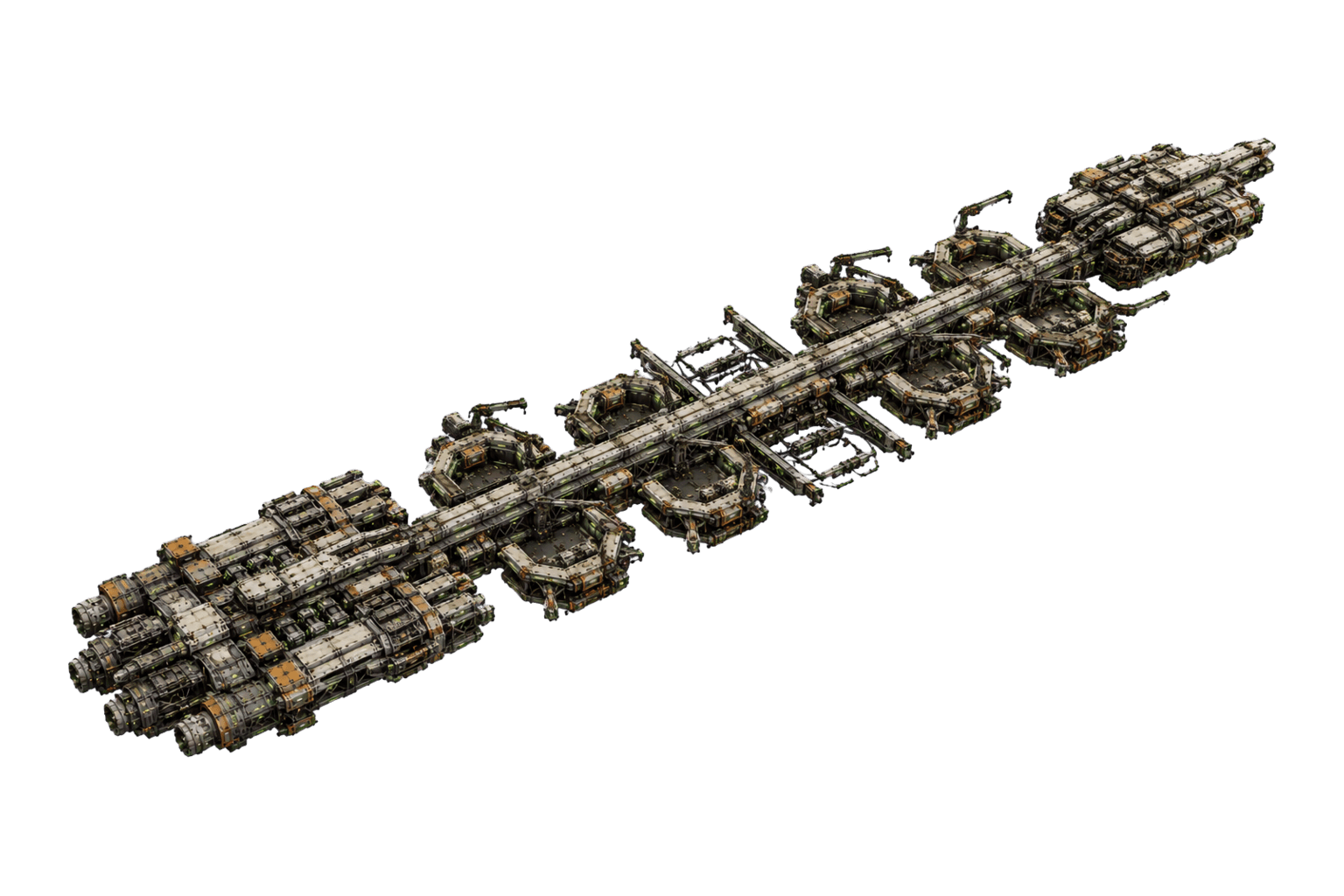
KET-LN-02line · Mobile fabrication anchor
A slow line-scale truss carrying complete replacement sections. It delivers severe Frigate pressure but exposes a costly structure when its Drone screen collapses.
RECOVERY LEDGER / OSSOssuary Exchange6 / 6 operationalOPENING COMMISSIONHome Guard + three mobile FleetsSalvage guilds that price history by the tonne and ransom what survives.
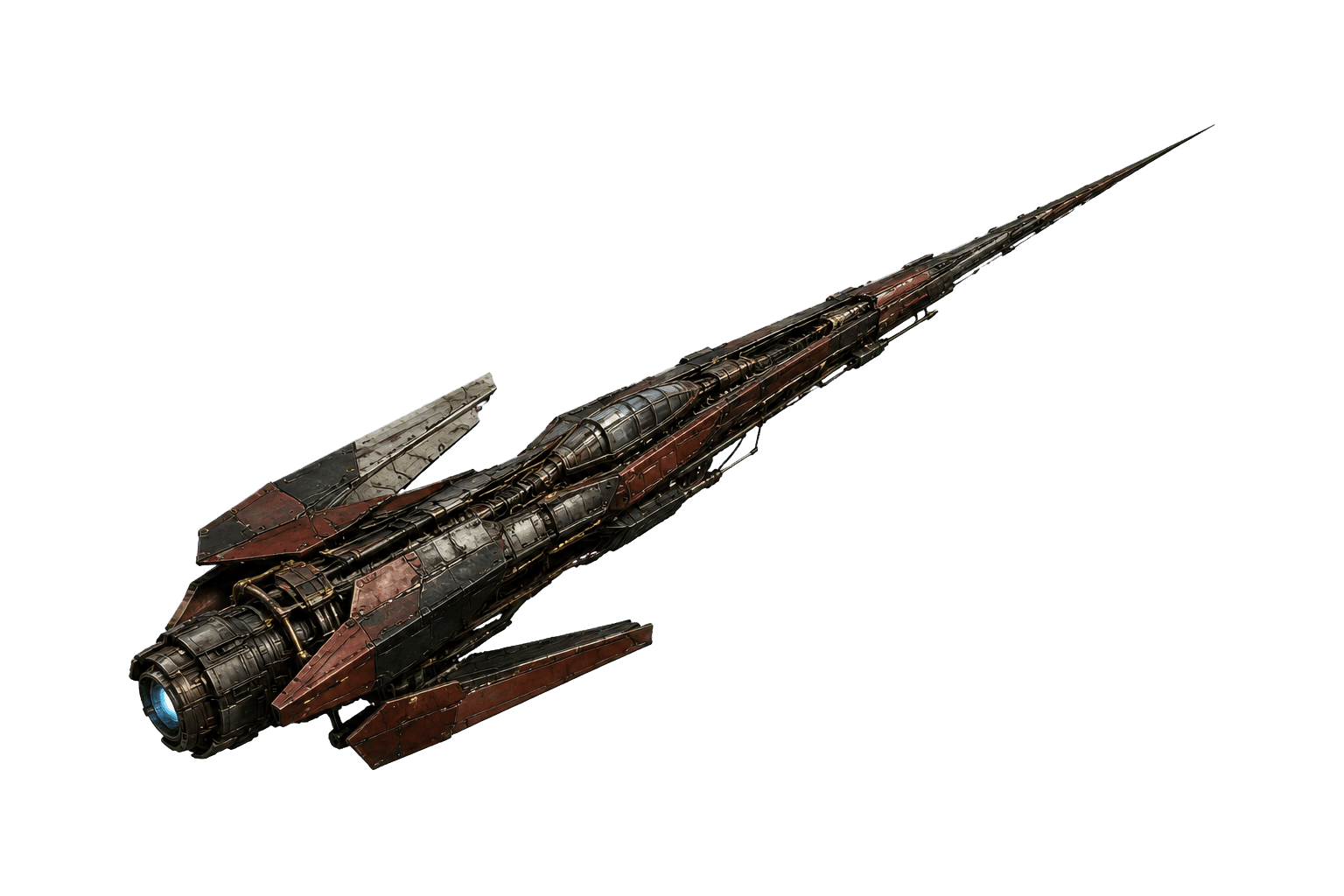
OSS-SK-01skirmisher · Capture-window disruptor
Marks vulnerable hulls and disables their control runs before the boarding line arrives. It creates inventory; it does not survive a prolonged exchange.
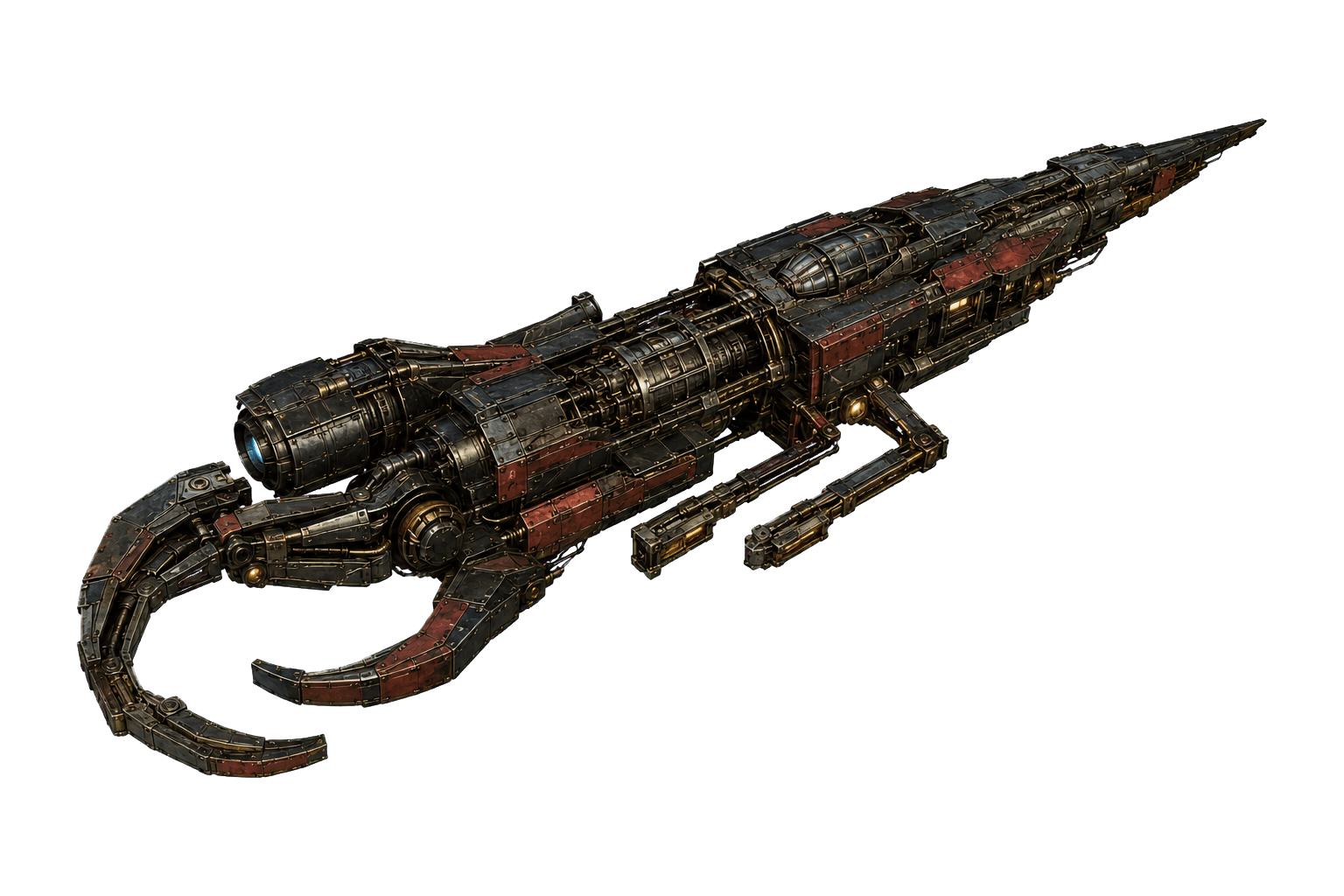
OSS-ES-02escort · Fast boarding cutter
Boards ships already disabled or opened by kinetic fire. Against an intact formation its hook crews expend themselves against sealed armour.
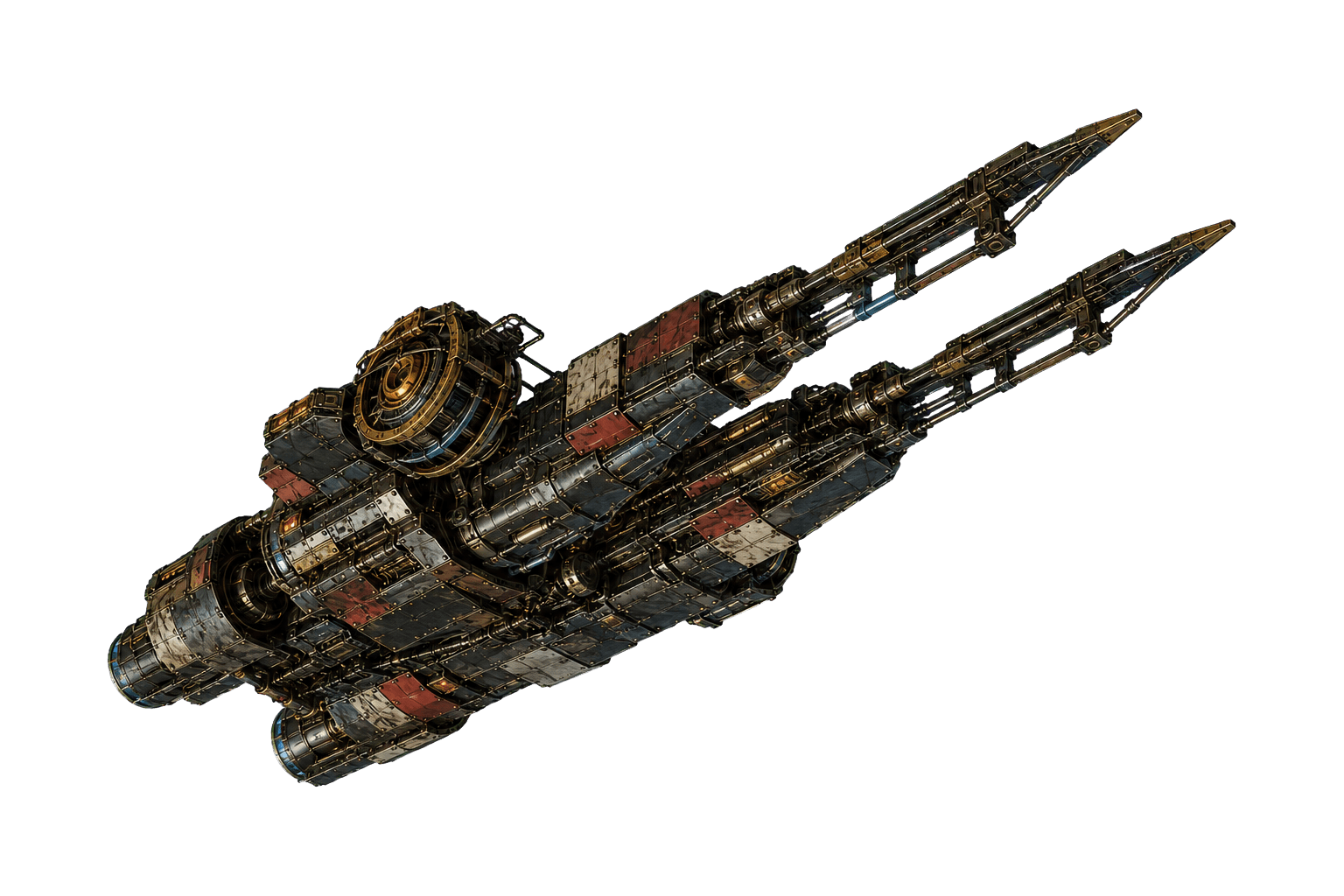
OSS-ES-06escort · Armour-opening escort
Applies measured kinetic damage without wasting recoverable hull mass. It prepares targets for Lien Hooks and Ransom Cages rather than chasing total destruction.
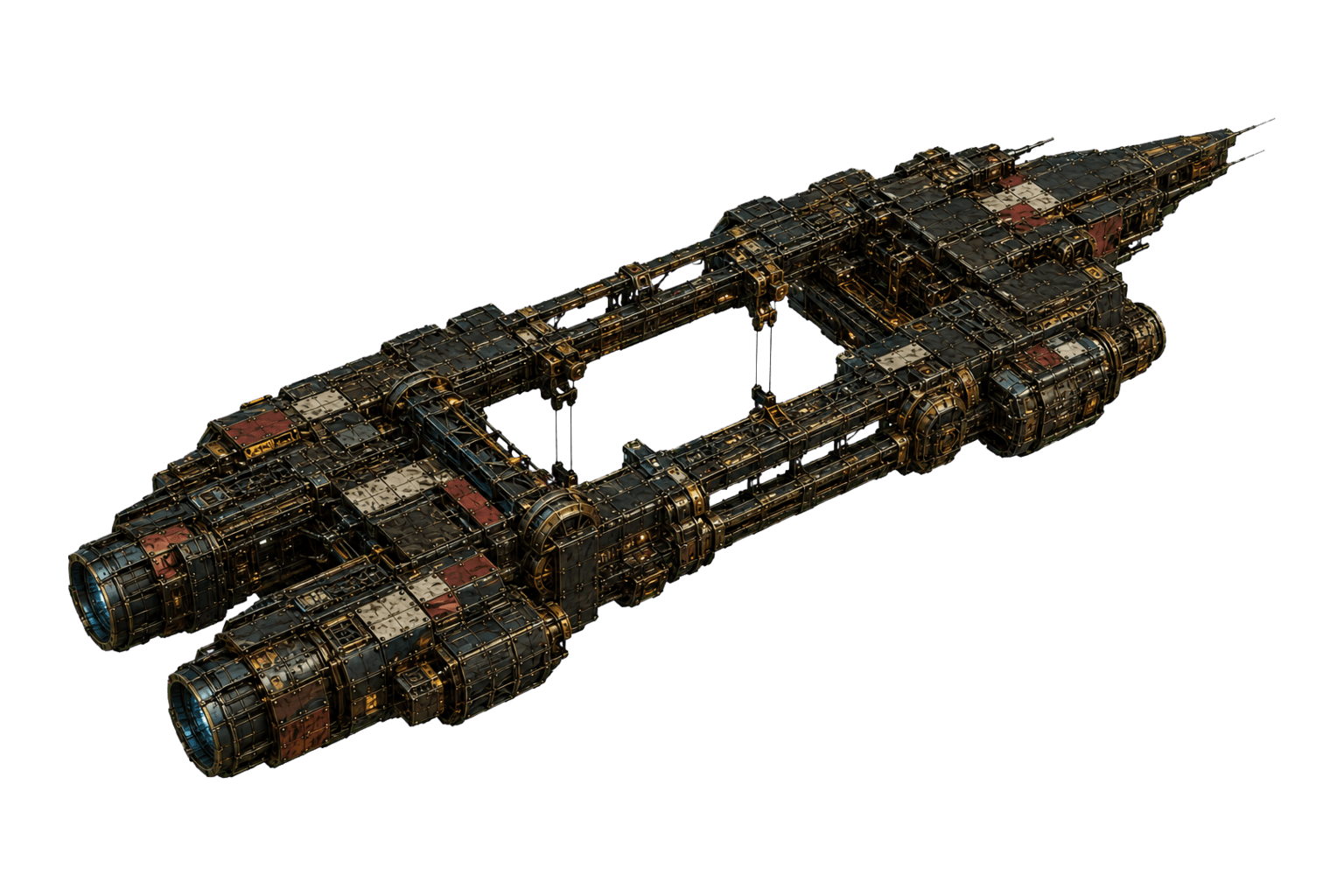
OSS-FR-04frigate · Heavy hull seizure
Converts disabled Frigates into captured tonnage. Its crews act after the opening exchange and require a mixed fleet to create vulnerable targets.
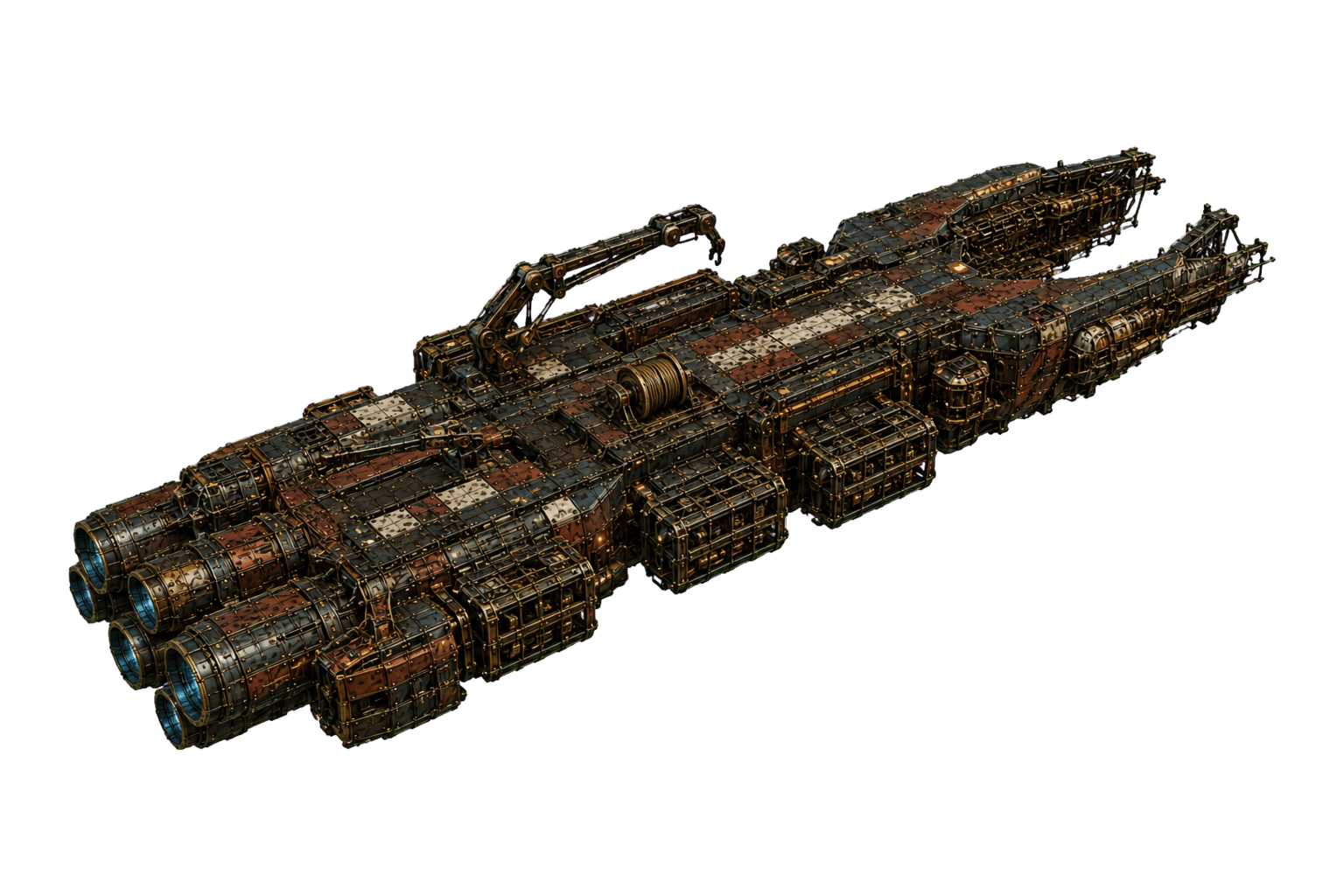
OSS-FR-10frigate · Driftfield claim and wreck sorting
Does not fire. Each survivor contributes 2 capture capacity while its cages separate usable assemblies from impact waste.
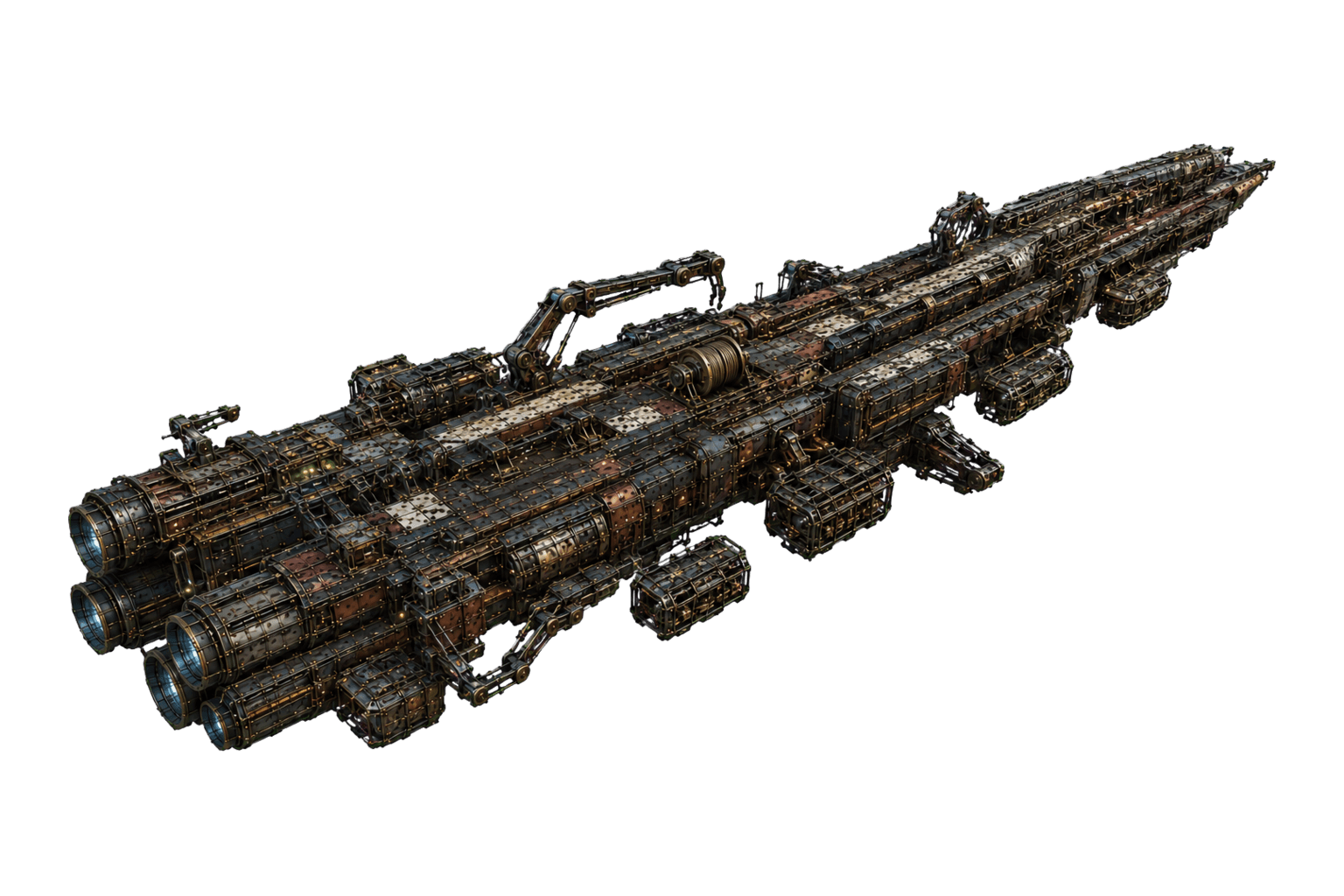
OSS-LN-01line · Line-scale collection anchor
Breaks capital armour after faster guild craft have priced the field. Slow arrival geometry makes every commitment an economic exposure.
RELATIONAL SIGNAL / LUMLumen Communion6 / 6 operationalOPENING COMMISSIONHome Guard + three mobile FleetsPost-human collectives that cancel conflict as interference.
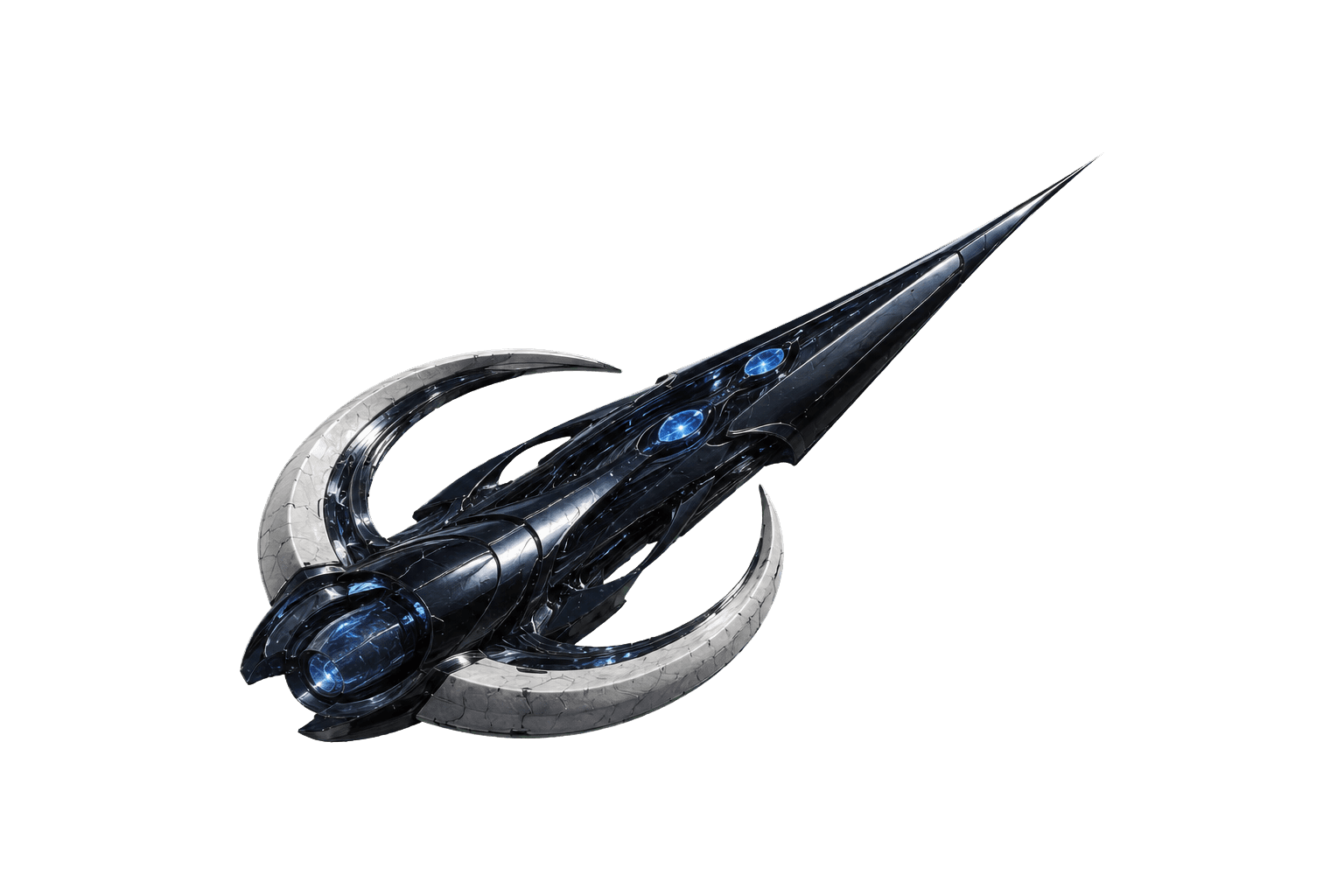
LUM-SK-01skirmisher · Early fire-control cancellation
Maps hostile firing solutions and interrupts Skirmisher control loops. It reduces the first return volley but cannot finish an intact heavy hull.
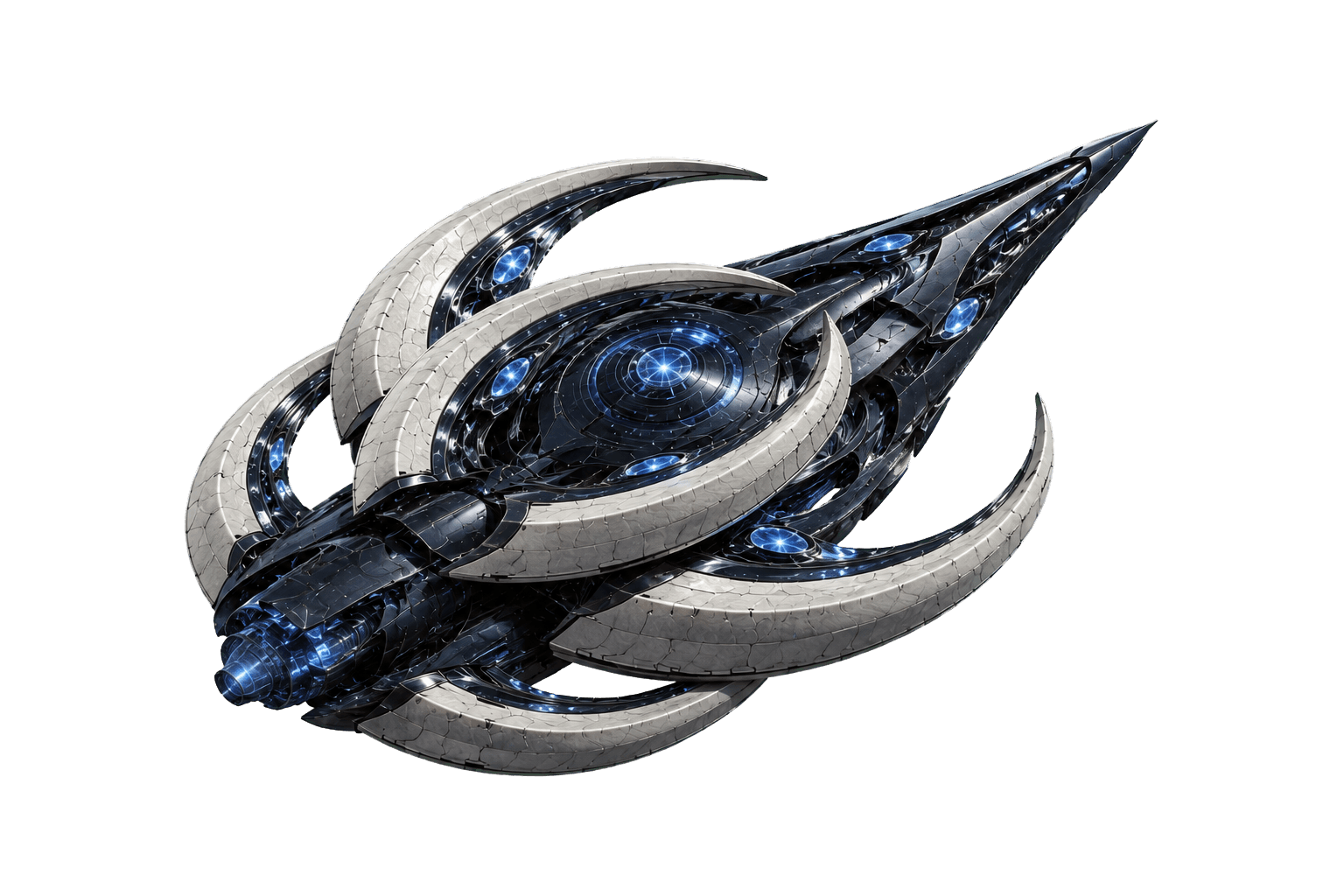
LUM-ES-03escort · Coordinated defensive escort
Removes fast attackers while maintaining a dense defensive geometry. Its finishing fire is modest, but its ceramic hull survives fragmented attacks.
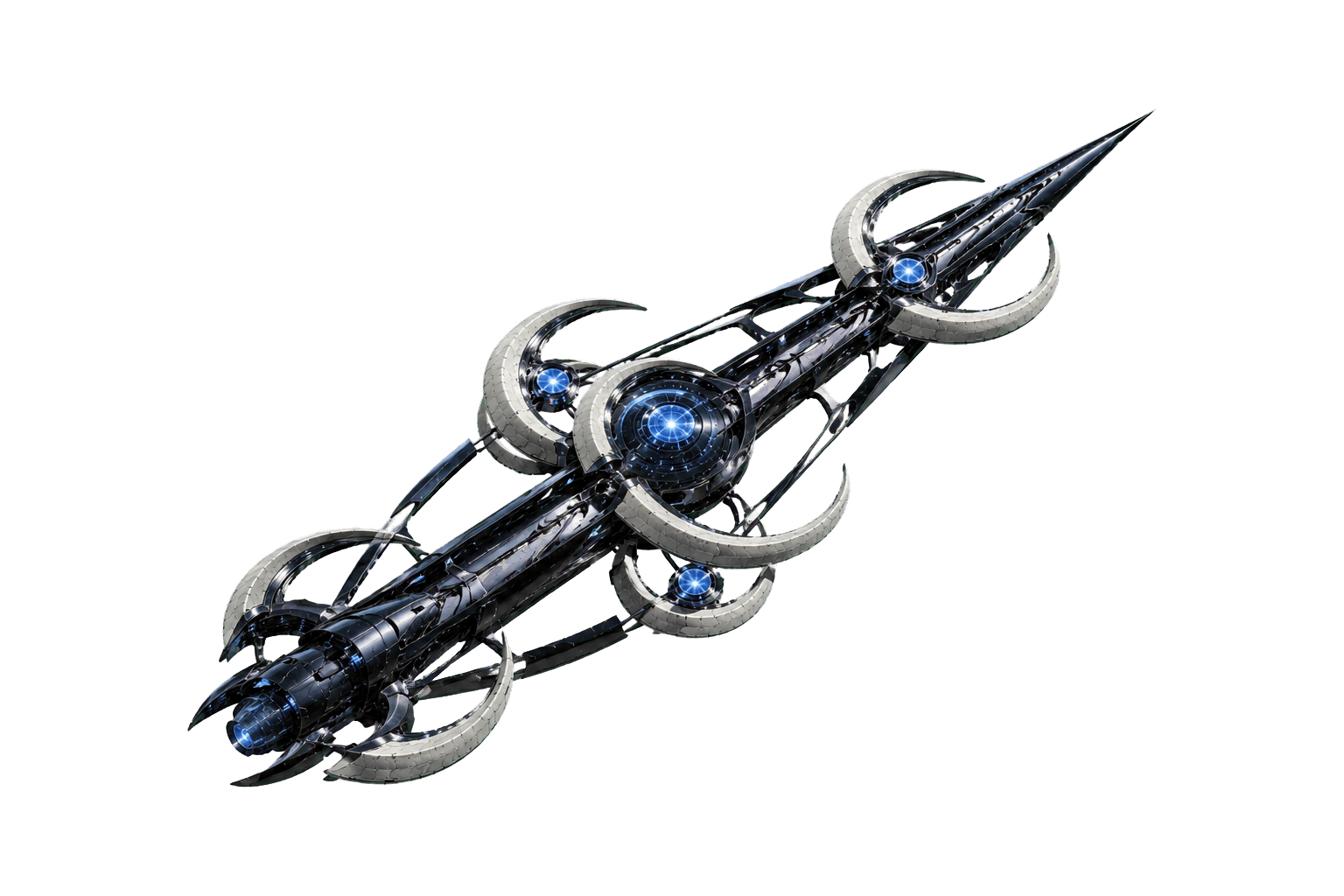
LUM-ES-08escort · Frigate control disruptor
Cancels Frigate targeting channels across a shared aperture lattice. It wins time for the formation and contributes little permanent loss by itself.
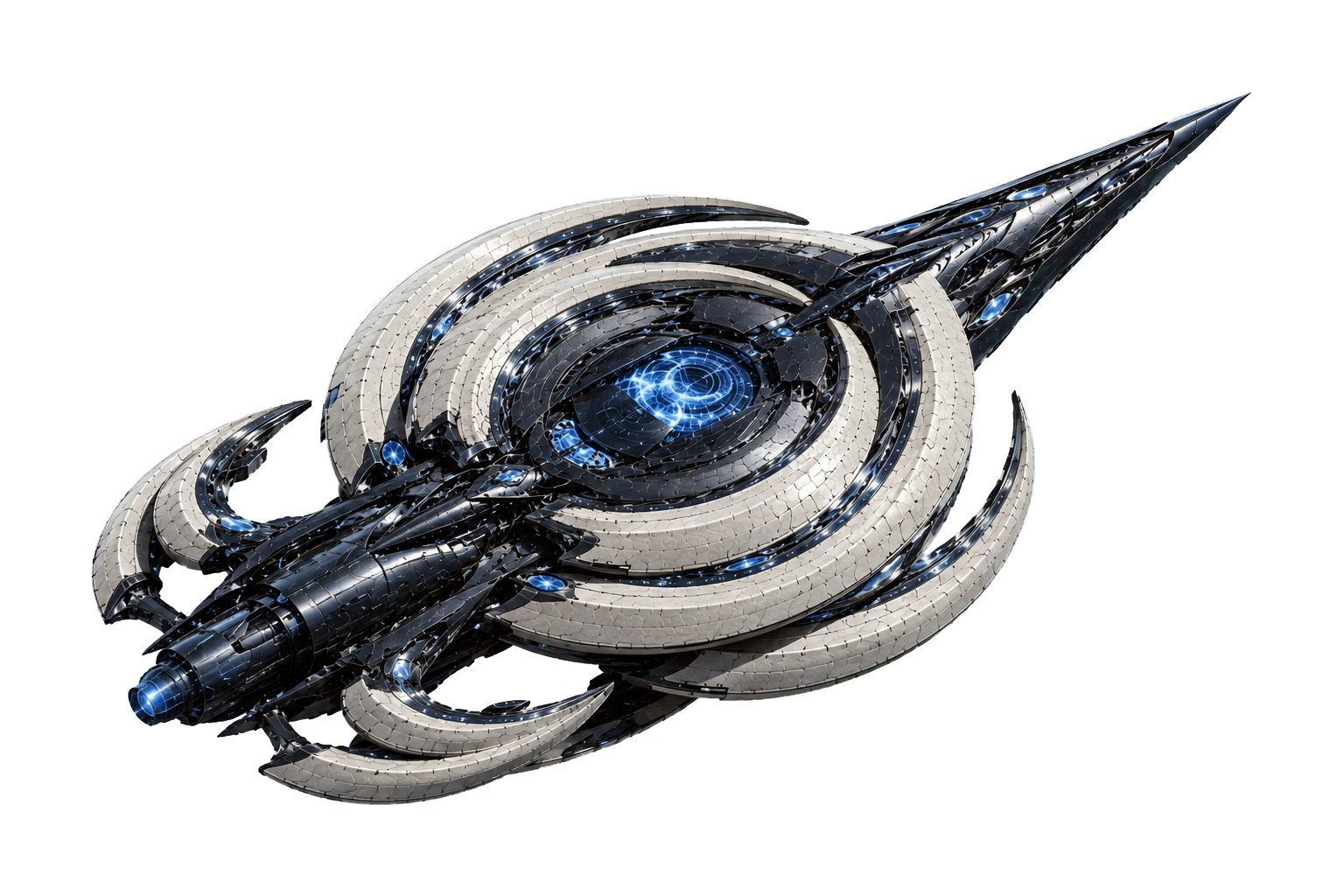
LUM-FR-05frigate · Protected escort breaker
Projects controlled kinetic fire through the formation aperture. High armour preserves the firing node; low peak damage demands coordinated support.
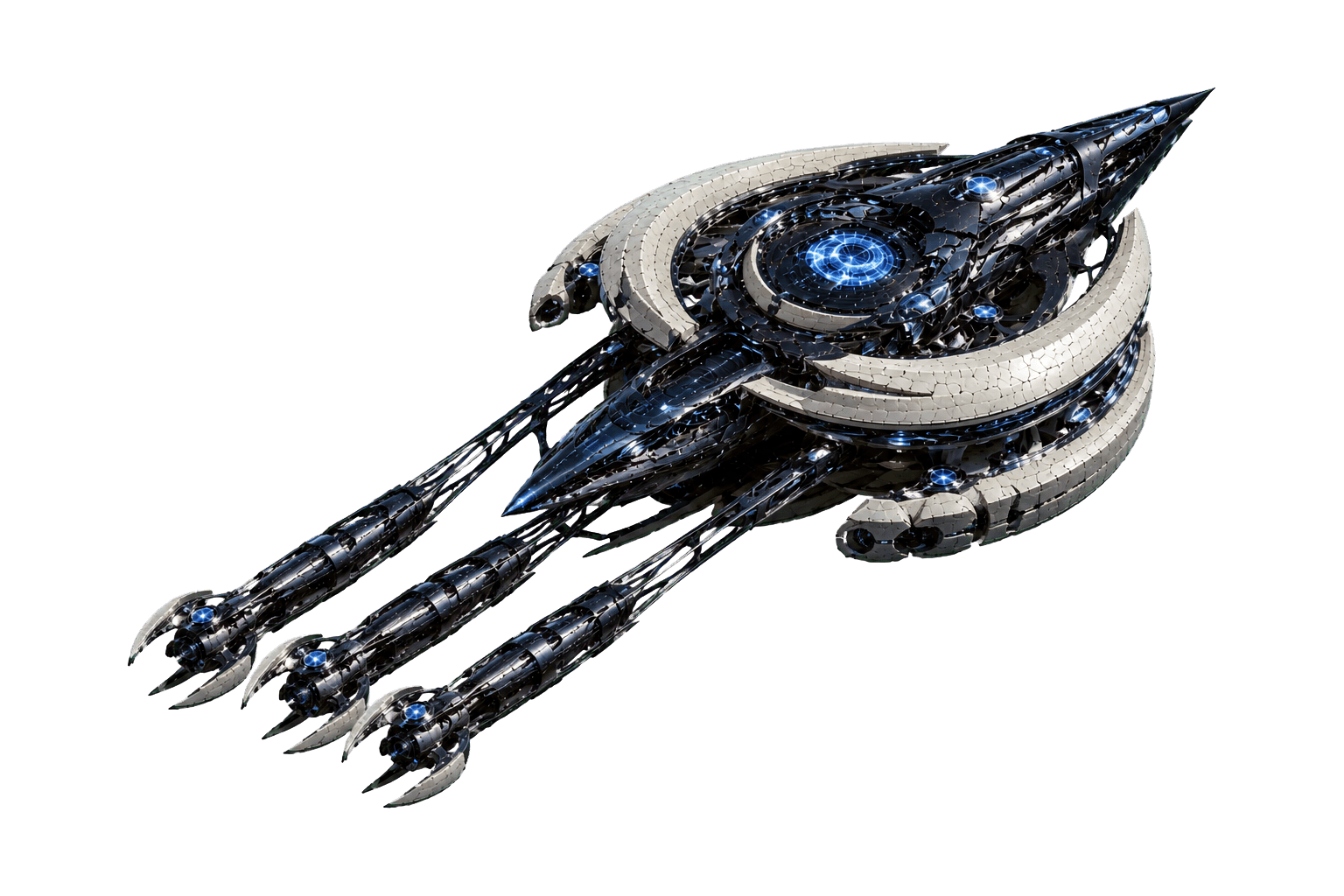
LUM-FR-11frigate · Planetary-anchor resource capture
Does not fire. Each surviving hull contributes 2 capture capacity and stabilises extraction geometry around the claimed field.
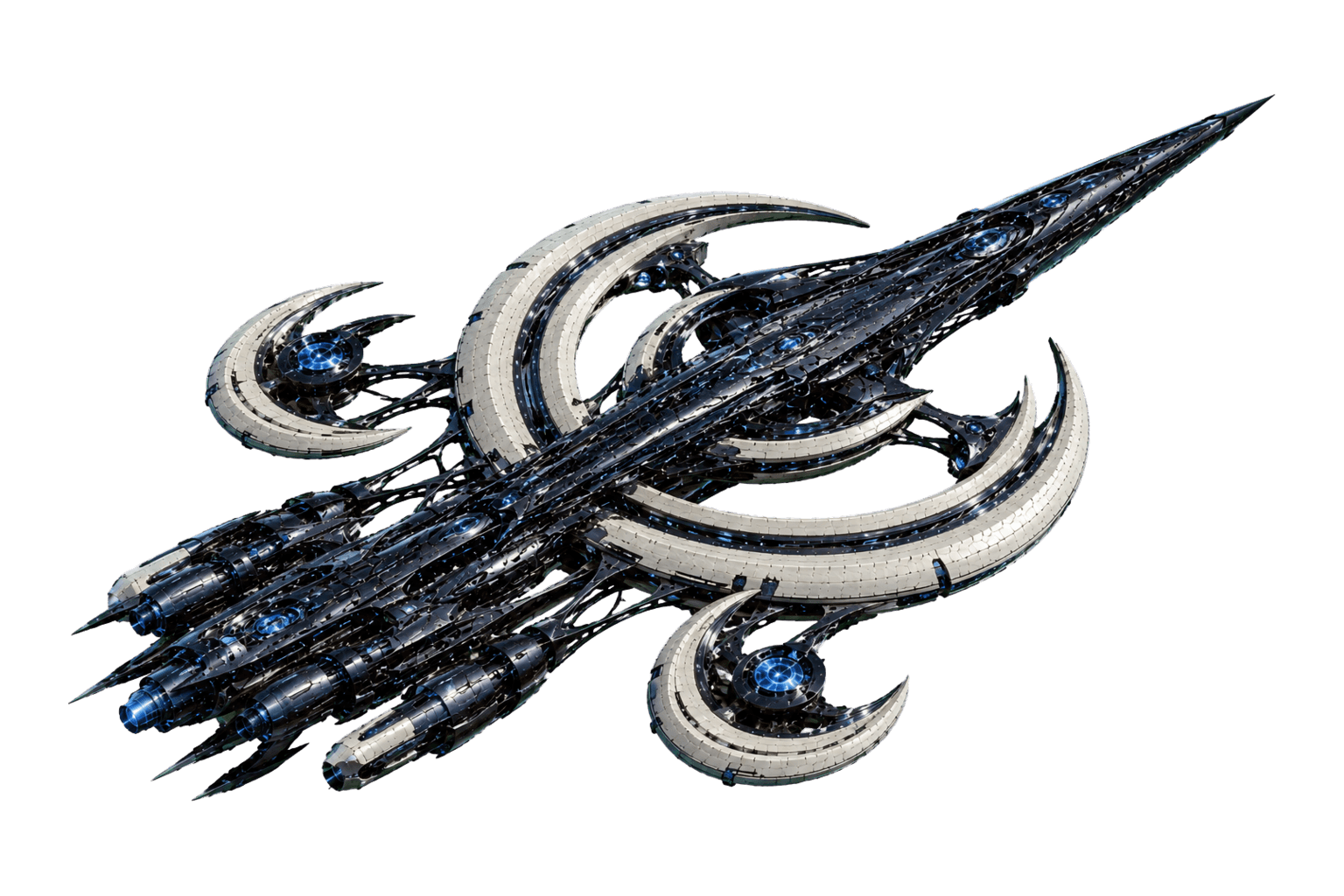
LUM-LN-02line · Capital cancellation anchor
Disables Frigate formations from inside a heavily protected lattice. It retains route control through denial rather than rapid destruction.
LIVE AUTHORITYHEL-FR-11Continuance HarvesterHelion CompactVEI-FR-09Morrowglass HarvesterVeilbound HousesKET-FR-09Matter ClaimerKeth FabricatorsOSS-FR-10Recovery BargeOssuary ExchangeLUM-FR-11Anchor TenderLumen CommunionSurvey vesselSurvey RunCarries a dated sensor package to one frontier coordinate and returns a permanent classification trace.
Mining bargeFerrite RecoveryCuts exposed mass along a surveyed frontier route. Mining moons and volcanic bodies return the cleanest loads.
Gas harvesterAtmospheric SkimSkims unstable atmospheric layers for Flux and trace Prism. Gas giants and twilight worlds favour the pass.
Salvage fleetWreck CensusRecovers structural mass and identifiable assemblies from old impact corridors. Ruins favour intact components.
Archaeology teamArchive DescentPlaces a sealed team inside a surveyed ruin envelope. The return may contain Prism, components, or a Cartographer trace.
The nine-type, five-rarity registry is the frontier classification standard used by fracture-alpha-v5. It never reveals an uncharted coordinate or a commander's unexpired survey.
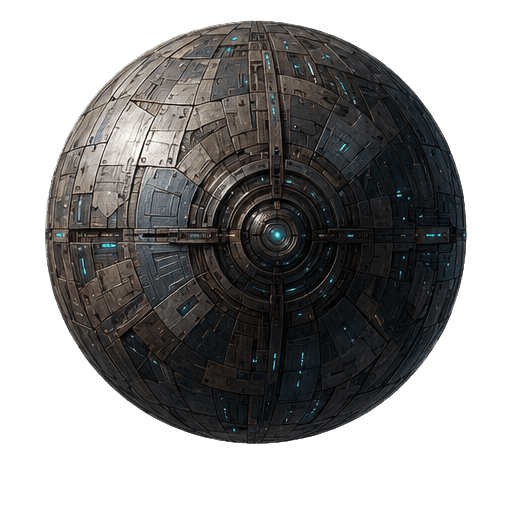
ARCHIVE-SHELL / C0Artificial anchor shellOrigin unverified. Surface access absent. Route response: zero.
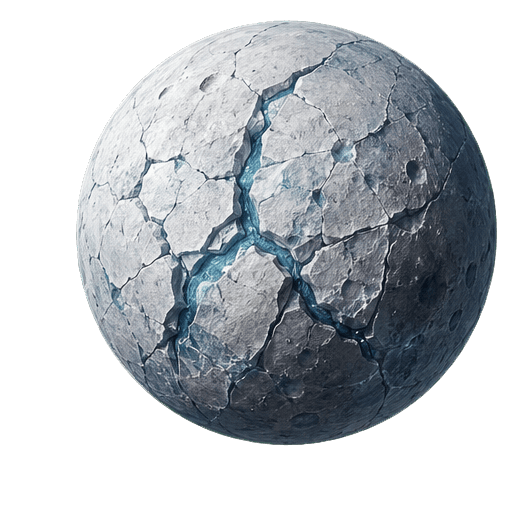
CRYO-FRACTURE / I2Fractured ice signatureSubsurface channels exposed. Development delay remains classification-bound.

OCEANIC-MASS / O1Ocean pressure signatureGlobal water mass. No separate mechanical class exists in the current ruleset.
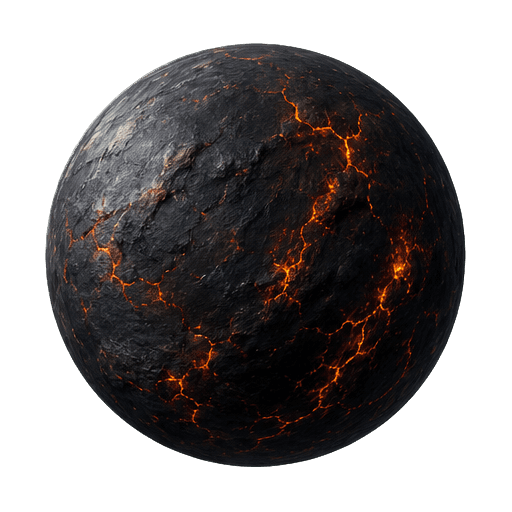
CRUST-FAILURE / V3Volcanic fracture signatureCrustal breaks active. Ferrite and Flux classification remains authoritative.

26% SIGNAL SHARE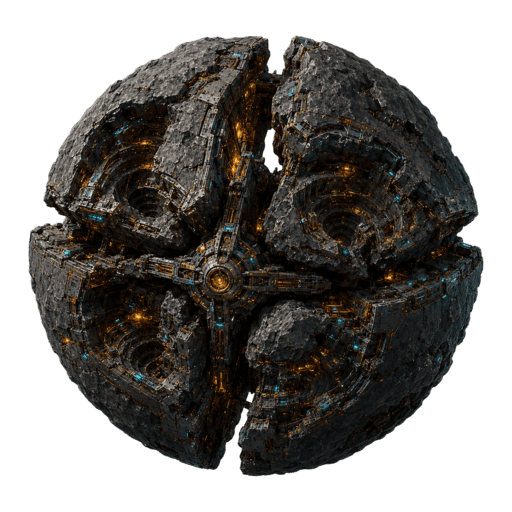
16% SIGNAL SHARE12% SIGNAL SHARE12% SIGNAL SHARE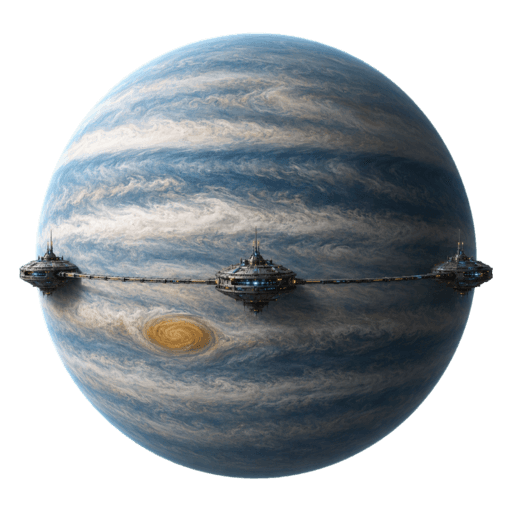
11% SIGNAL SHARE
09% SIGNAL SHARE
07% SIGNAL SHARE
04% SIGNAL SHARE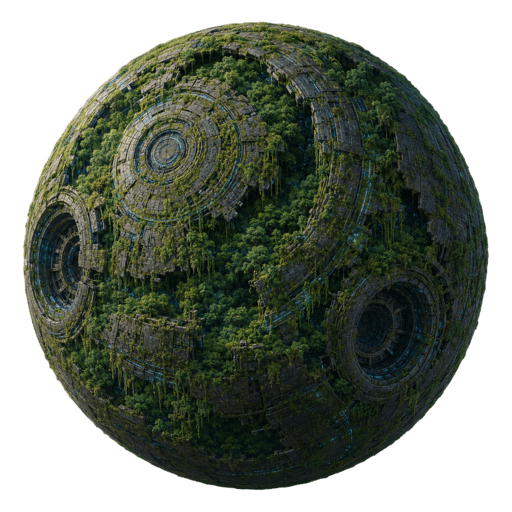
03% SIGNAL SHAREType determines use. Rarity changes yield, collection value, and anomaly potential.
55%Baseline yield · collection weight 1
25%+25% yield · collection weight 2
13%+60% yield · collection weight 4
6%+100% yield · collection weight 8 · Cartographer trace possible
1%+160% yield · collection weight 20 · Cartographer trace possible
LIVE // fracture-alpha-v5A successful Planet Scan charts a frontier contact and reveals its classification. It does not add a planet to the command, change score, or make the world a territorial target. Asteroid Fields remain the only capturable frontier holdings under fracture-alpha-v5.
DECLARED DIRECTION // AUTHORITY NOT YET ACTIVEA future Colony Fleet may anchor a surveyed planet. Once colonised, that non-home world will contribute collection value, require a garrison, and permit attack, defence, capture, and abandonment reversion. A home planet will remain raid-only and permanent.
Recovered pre-Severance instruments describe this gold output state. Fracture Alpha cannot produce or verify it. The strategic map therefore retains the blue dormant Core until an authoritative tick records activation.
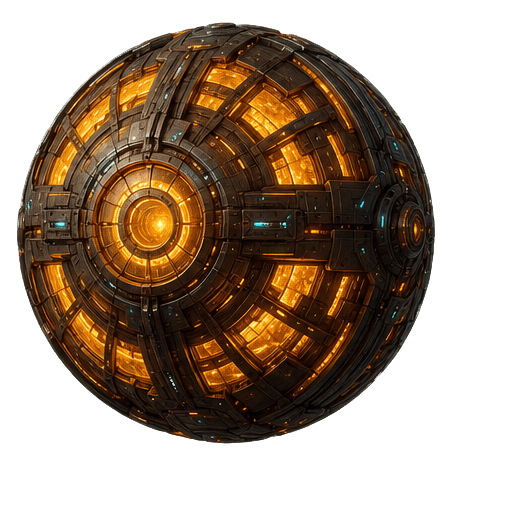 ARCHIVAL STATE // NOT LIVE
There is no universal coin in the command economy. Ferrite, Prism, and Flux are physical constraints. Research improves work; structures concentrate it; doctrine reallocates attention. None permits material authority to cross Collapse.
BASE ANCHOR INTAKE+120 / tickHull frames, structures, armour, extractors, and kinetic mass.
A command rich in Ferrite can replace weight. It cannot replace timing.BASE ANCHOR INTAKE+90 / tickComputation, sensors, research, signalling, and precision systems.
Prism improves what a command can know. Intelligence still expires.BASE ANCHOR INTAKE+75 / tickDrive fields, energy systems, route work, and high-load industry.
Flux moves force through the lattice. It does not make an invalid route safe.Hull accessSets which ship classes your production queue can assemble.
Keep the yard aligned with Hull Engineering. Research unlocks the design; the yard unlocks the machinery. Production population controls the base assembly rate.
IntelligenceReveals private planet intelligence; Asteroid Fields are already public.
Level 1 enables Planet Scans. Every level adds 15 scan strength, improving the chance of revealing resource bands and structure levels through enemy Security.
Hull economyProduces protected Ferrite at your home planet every tick.
Ferrite pays for armour, ship hulls, and heavy construction. Extractor income cannot be captured like an Asteroid Field.
Research economyProduces protected Prism at your home planet every tick.
Prism funds research, sensors, and Planet Scans. Build it when intelligence or technology is your bottleneck.
Transit economyProduces protected Flux at your home planet every tick.
Flux pays for propulsion, advanced systems, and many Fleet hulls. It is the slowest extractor, so plan ahead for expensive launches.
hullUnlocks Escort designs at level 1, Frigates at level 2, and Line Ships at level 4 when the Light Shipyard also meets the class requirement.
signalsEach level adds 5 Planet Scan strength and extends completed intelligence by 6 ticks.
extractionEach level adds 2.5% to Asteroid Field and extractor output. Protected base income is unchanged.
logisticsLevels 2 and 4 each remove one tick from Fleet travel, to a maximum two-tick reduction.
expansion+15% Asteroid Field income and +1 efficient field
TRADEOFF // +8% structure cost and -10% scan resistanceinnovation+20% research and +10% scan strength
TRADEOFF // -12% production throughputvigilance+20% scan resistance and +10% defensive armour
TRADEOFF // -8% extraction incomecooperation-1 local Defend ETA and +20% Influence
TRADEOFF // -8% Attack damagedominion+10% Attack damage and +15% proportionate Renown
TRADEOFF // -10% protected base incomeThe public ledger records that an engagement resolved, where it resolved, and what the season notice said. Detailed deterministic reports remain visible only to participating commands. No private Fleet composition or expiring intelligence enters this surface.
HOME-WORLD RAIDA successful raid can transfer bounded stores, Renown, and temporary disruption. The planetary anchor, population, command identity, and protected base income remain.
TERRITORIAL BATTLEAsteroid Fields can change hands when the authoritative battle window resolves. Supporting Fleets alter that window only if their arrival geometry is valid.
RECOVERY WINDOWDestroyed, disrupted, captured, and recovered hulls are recorded separately. The interface does not convert consequence into spectacle.
LAST COMMITTED STATE // T702The ledger will populate only after an authoritative arrival transaction resolves. Scheduled hostility is not history.
Twelve transmissions across five phases. They are part of the setting and the full sequence is available here whenever you want to read it.
3 records3 records3 records2 records1 recordNULL CANTICLE // OPENING PULSE FRACTURE COHERENCE CONFIRMED
It did not come from a star, a relay, or any bearing a navigator could defend. It arrived through machines that had been disconnected for generations. Derelict navigation rings turned without power. Survey vaults that had been sealed since the Still Years opened along seams no one had recorded.
Five powers translated the same phrase within the hour, and disagreed immediately about what it meant. The Helion Compact filed it as a continuity summons and began drafting commissions. The Veilbound Houses filed it as a trap that had learned patience, and began moving. The Keth Fabricators had ships underway before either finished reading. The Ossuary Exchange opened a market in salvage rights to a frontier none of them had seen. The Lumen Communion listened to the intervals between the tones and reported, without elaboration, that something was listening back.
Inside the signal was a chart. Inside the chart was a frontier: hundreds of planets arranged beneath the ruins of a network the archives had recorded as lost.
The signal also contained a timer. It has not stopped counting since.
“We were not invited. We were scheduled.”
Unattributed Veilbound listening log, opening pulse
CANTICLE // TICK 006
PLANETARY ANCHOR ACCEPTED
An anchor is not driven into rock. It is driven into the route geometry beneath a world, and the world is what holds still while it happens.
Crews describe the first hours as a pressure behind the eyes and a sound the instruments do not register. Then the coordinate resolves, the command link answers, and the planet exists in a way it did not exist an hour earlier. It can be found. It can be defended. It can be recorded.
It also cannot be moved. Every commander who accepts an anchor accepts a fixed address for the length of the Fracture, and every rival receives that address at the same moment. The Compact regards this as the honest price of stewardship. The Houses regard it as the reason they build to leave.
Both positions are correct. Neither changes the arithmetic. The anchor holds, or the season is spent somewhere the Canticle cannot reach.
CANTICLE // OPENING SEQUENCE
PROTECTION SHIELD DISSOLVED
New anchors are initially quiet, shielded from the wider network. The refusal is mechanical, not merciful: a freshly established command link cannot survive an orbital intrusion and remain stable, and a ruptured link takes its local coordinate route with it.
Eventually, this natural isolation fades. No alarm sounds. No pulse marks the change. Commanders describe the transition simply as the moment the chart stops being a simulation and becomes a contested position.
At coordinate 1.1.1 the Helion colony Vesper's Wake detected an incoming route crossing their system boundary before their first expansion cycle had closed. The Veilbound log claims their scouts observed the insertion first.
The Canticle records neither claim. It continues tracking the alignments, indifferent to who holds the ground.
“The grid has opened. It does not say who will be standing here when the first fleet drops.”
Commander Ilyan Vale, Vesper's Wake
CONTACT // UNCHARTED PLANET
IDENTITY WITHHELD BY SIGNAL DECAY
A contact shell is the least a planet can tell you: that it is there, and roughly where. Not its power. Not its strength. Not whether the last fleet that went to look came back.
Colony anchors identify themselves because they are built to be found by their own System. Everything else on the chart is inference. A survey resolves one contact into a name, and the name is permanent — the lattice will not forget a world once it has been properly read.
The rest expires. Development drifts. Defences are rebuilt. Structures rise between one capture and the next. An old survey is not a lie; it is an accurate record of a world that has since moved on without informing you.
Commanders who treat expiry as a formality lose fleets to planets that were, at the time of reading, exactly as weak as reported.
CANTICLE // TICK 130
CARTOGRAPHER FRAGMENT ENTERED INTO RECORD
The fragment recovered from a dormant construct in the outer chart is not a message. It is an index: a list of anchor-capable coordinates, resource bodies and route tolerances, ordered by suitability for occupation.
Its formatting predates the Severance. Its contents describe the frontier as it is now.
Helion analysts argue the simplest reading is the correct one — the region was surveyed long ago and has changed little since. Veilbound readers note that the index lists worlds whose current condition could not have been predicted from a pre-Severance survey, and decline to say more in open channel.
No power has produced a fragment naming who compiled the index, or for whom. The archive holds the question open, which is its habit.
TERRITORIAL RECORD
FIELD HISTORIES APPENDED
Survey the richer fields and the debris resolves into shapes: stabiliser spars, foundry housings, the shattered mass of moons that were being taken apart on purpose when the taking apart stopped.
Ferrite-bearing mass sits where hulls were once printed. Prism grows in formations that hold phase where ordinary crystal would not, near machinery that failed while carrying signal. Flux collects where the failure was violent.
This is why fields cannot be hidden. They were built to be found, then broken, and the breaking left them louder than before. Any commander with a working sensor can read a field's richness from outside the System. What they cannot read is who is currently standing in it.
Ownership is decided in orbit, by whoever clears the screen and still holds harvesting capacity when the window closes. The field itself keeps no loyalty. It has outlasted every claim made on it so far.
HOME ORBIT BREACHED
ANCHOR STABILITY MAINTAINED
A raid secures only brief orbital dominance. Within this narrow window, an intruder may shatter the defensive screen, disable hulls, and siphon unprotected materials from the upper atmosphere and staging yards.
Yet the planetary anchor remains untouched. The world does not yield its coordinate. The command link does not break. Deep subterranean structures are insulated, and essential operations continue so the colony is never fully silenced.
This is not a matter of military restraint. Attempting to occupy a hostile anchor destabilizes the local route network, rendering the planet unreachable, while orbital destruction would ruin the very assets the powers came to claim. The constraint is fundamental physics; combatants merely adapt to it.
The Home Guard stands to make any intrusion costly. It claims no distant moons, but it guarantees that the commander has a home to defend.
“The planet remains. Count the survivors, close the breach, begin again.”
Home Guard recovery protocol
CANTICLE // RECORDED DEVIATION
ROUTE CONVERGENCE DETECTED
The fractured network cannot sustain permanent routes. It opens fleeting alignment windows at regular intervals, refusing passage at any other moment. A fleet is bound by the velocity of its slowest vessel, arriving when the geometry permits and no sooner.
This dictates the entire conduct of the war. A commander cannot win through split-second reactions. Victory belongs to those who assemble the correct force, commit it to the alignment path early, and correctly anticipate where the enemy will materialize.
Reinforcements are an act of faith. A support fleet must be launched toward a future battle that has not yet begun, against incoming forces that cannot yet be seen. Systems survive when their commanders send ships to support allies on predictions that may prove incorrect.
The archive logs who entered the orbit. It does not count those who only planned to.
CANTICLE // TICK 560
CROSS-SYSTEM COORDINATION DETECTED
A System is received, not chosen: a local route neighbourhood whose members can reach one another before distant help. An Alliance is chosen, and therefore has to be maintained.
Some are military coalitions with shared operations and a common treasury. Some are trade agreements that have never fired a shot in concert. Some are temporary answers to one threat and dissolve the tick after it passes. None are automatically loyal, democratic or permanent.
The Compact writes charters and expects them to outlive their signatories. The Houses prefer arrangements that can be abandoned without dishonour, on the grounds that a compact you cannot leave is a compact someone else controls. Both have lost seasons to the other's method.
What survives, in either case, is narrower than the charter: a short list of commanders who committed when the arrival tick was inconvenient.
CANTICLE // ACCELERATED PHASE
MERIDIAN ACTIVITY CONFIRMED
A dormant Node is indistinguishable from debris, which is the only reason some of them survived the Still Years. An active one rearranges what the chart means: approaches shorten, routes redirect, and paths that were strategically irrelevant an hour earlier become the only ones that matter.
No Node can be read alone. Each is a term in a longer sequence, and waking the wrong one may expose a route to a rival, close a safer approach, or answer somewhere else in the frontier entirely. Node warfare is therefore an intelligence problem before it is a military one.
The powers have begun to disagree in public about sequence order, which is itself a form of intelligence. The Canticle publishes the activity and not the interpretation.
Route coherence is falling on schedule. The measurements are becoming precise enough to plan around, which is the surest sign that the theatre is beginning to end.
MERIDIAN CONVERGENCE DETECTED
OWNERSHIP UNRESOLVED
The Core is not a throne, a planet or a weapon. The working description — and it is only a description — is a consensus engine: it determines which routes are recognised as real, which anchors remain stable, and which records are accepted into the archive before Collapse.
Helion wants a lawful, continuous network restored. Veilbound wants no single authority able to grant or refuse passage. Keth wants the self-repair logic. Ossuary wants the ledger of every lost fleet and unsettled claim. Lumen does not call it a machine at all; their choirs call it the Unfinished Listener, and decline to explain the first word.
Fields fund the war. Nodes decide who can reach it. The Core decides what the war leaves behind — which is why the approaches to it are contested by commanders who agree on nothing except that arriving late is the same as not arriving.
Whether the Core can be controlled, repaired, persuaded, or only interpreted is not established. The powers proceed as though the answer is already known to them. They disagree about what it is.
FRACTURE CLOSED
COMMAND IDENTITIES PRESERVED
Collapse is not annihilation. Routes close, remote fleets are withdrawn or stranded, and the strategic theatre becomes unreachable. Stockpiles, territorial claims and military force are sealed inside the closing Fracture. Home populations continue wherever their anchors held, isolated from the wider network but not ended by it.
What crosses is the record: identities, honours, and the outcomes the archive accepts. Material power is temporary by design. This is the reason a season can be lost without a commander being erased, and won without a commander being owed anything in the next.
At the close of the First Canticle the signal completed its final phrase and then issued one additional pulse, in a position the opening transmission did not contain.
It has not been repeated. It has not been explained. The archive has entered it as observed, unattributed, and open — which is the archive's habit, and possibly its instruction.
“The system remembers who arrived.”
Null Canticle, closing transmission
Operational language is part of the rules. A raid is not conquest. A scheduled route is not an arrival. A plan is not a committed tick. The archive preserves those distinctions.
Every commander receives one planet that cannot be taken from them. Every Fleet order is a promise made hours before support, opposition, and loss are known. Every survey begins ageing as soon as it resolves.
Collapse closes the theatre. The Archive preserves what command authority chose while time remained.
Open a command link